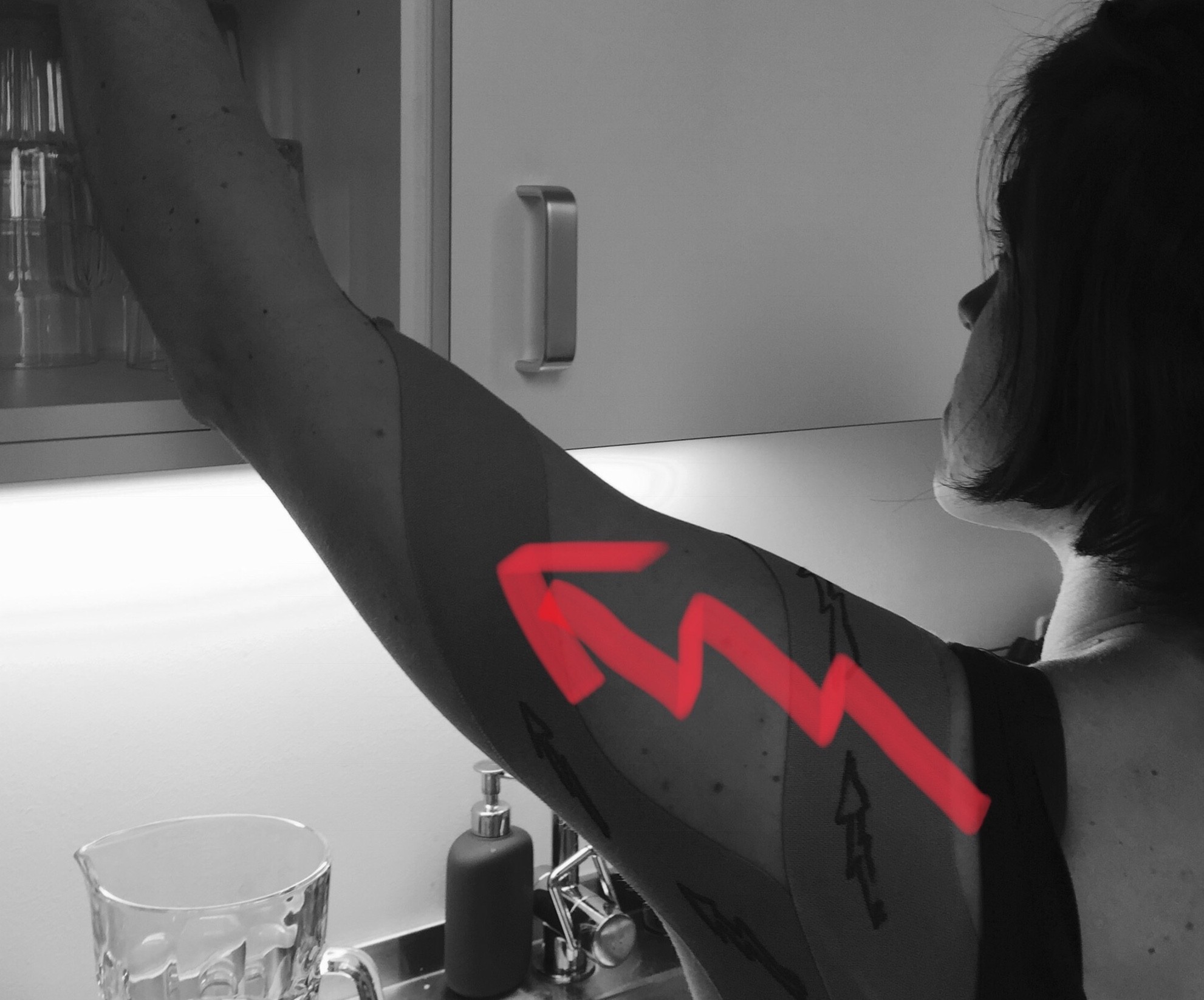
The shoulder is the most mobile joint in your body, and that is exactly what makes it vulnerable: it is guided less by bone than by muscles, tendons and the joint capsule. Shoulder pain therefore has many faces, from the sharp pain when lifting the arm, to the shoulder that aches at night, to the joint that stiffens bit by bit. At BodyLab in Zurich Altstetten, we work out with you what is behind your shoulder pain and treat it specifically: with physiotherapy, osteopathy and training under one roof.

What is holding you back? Get to the root of your shoulder pain.
Three common conditions account for the vast majority of shoulder pain. Each card leads to a dedicated page with deeper insights and your path to recovery.
Other causes we know and treat
Rotator Cuff
The muscle group that guides and stabilizes your shoulder joint can become irritated or even suffer a tendon tear. If you suspect a tear—perhaps after a fall that leaves you with a sudden loss of strength—getting a professional medical evaluation is your first step to a strong recovery. Whether you choose conservative rehab or need post-surgery support, we'll be right by your side to guide you back to peak performance.
Regain your strength: Post-dislocation stability
After a shoulder dislocation—often a setback in sports—your joint needs targeted muscle building to regain its peak stability and power.
Radiating pain from the cervical spine
Not all shoulder pain originates in the shoulder. Tension and irritated nerve roots in the neck can radiate all the way down into your shoulder and arm. We'll pinpoint the exact cause during your assessment. Learn more on our page about neck pain.
How we treat shoulder pain
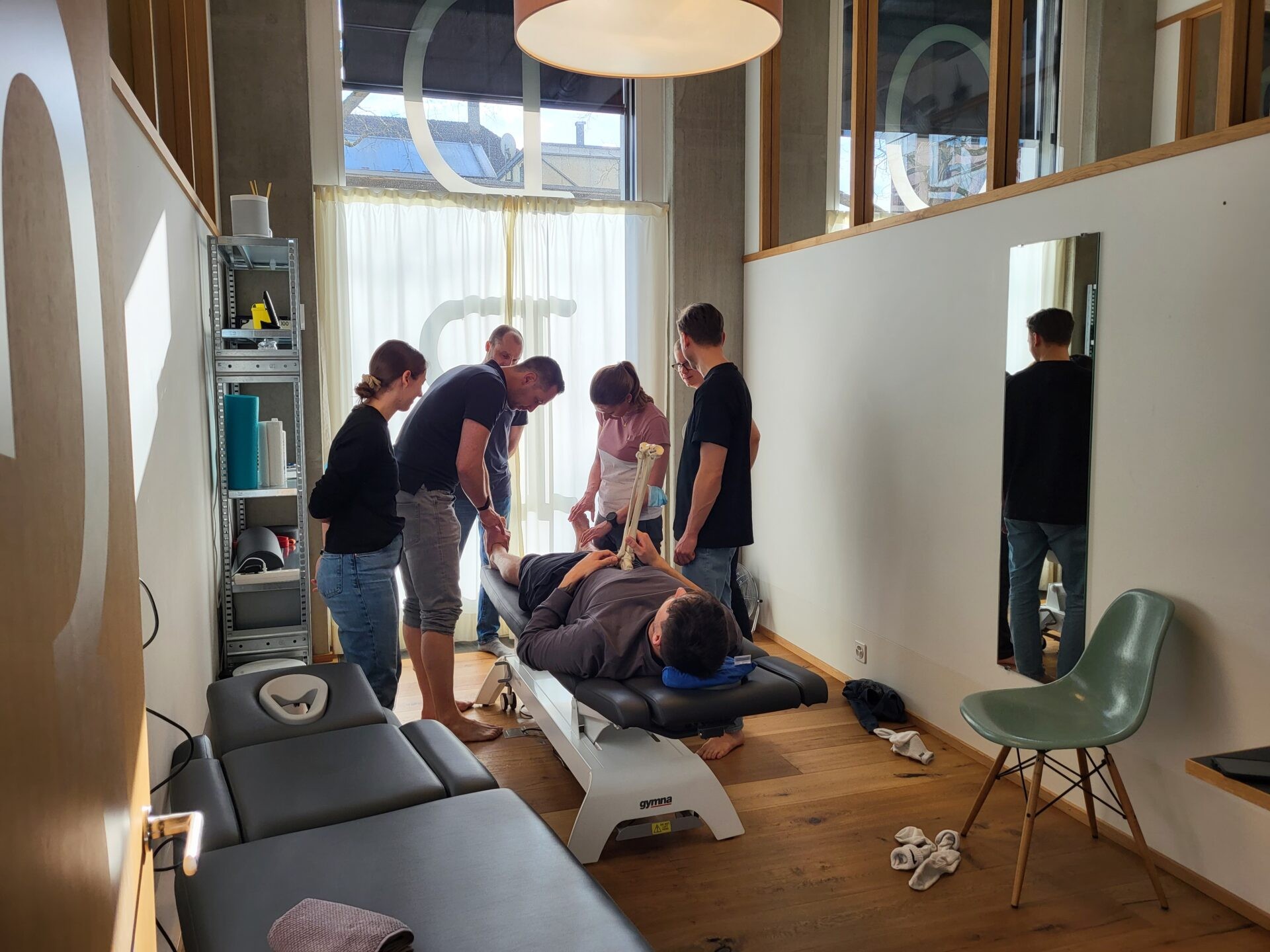
It all begins with a thorough assessment: We look at how your shoulder moves, where strength is missing, and what triggers the pain. From this, we create an individual treatment plan. Depending on your situation, we combine:
Physiotherapy and sports therapy: active exercises, load management, and manual therapy—targeted hands-on techniques for your joints and muscles.
osteopathy: looks at connections beyond the shoulder, such as the thoracic spine and ribs, which support shoulder movement.
Dry Needling: fine needles release myofascial trigger points—hardened muscle knots that can radiate pain into the shoulder and arm.
Massage: relieves muscular tension around your shoulder and neck, complementing active therapy.
Training: Strength is the best long-term insurance for your shoulder. You train in our own, functionally equipped training area right in the practice—if desired, as medical training therapy (MTT), one of several training options. If your shoulder was operated on, we support you in your rehab after shoulder surgery. Has your shoulder pain been bothering you for more than three months? Then you will find a dedicated path forward on our page about chronic pain.
When to consult your doctor
Shoulder pain is rarely dangerous. However, you should seek immediate medical evaluation if you experience any of these signs:
A fall or accident resulting in a significant loss of strength or a visible deformity: a possible tendon tear or dislocated shoulder, both of which require immediate medical assessment.
A fever accompanied by a hot, swollen joint: a potential sign of a joint infection.
Numbness, tingling, or paralysis in your arm or hand: nerves may be involved.
These signs are rare. If none of them apply to you, nothing is holding you back from starting your treatment with us.
Who covers the cost? Let's talk investment in your future.
Physiotherapy is covered by basic insurance with a doctor's referral, or after an accident by accident insurance or your health insurance's accident coverage. You can book osteopathy directly, without a referral; most supplementary insurance policies for alternative and complementary medicine contribute to the costs, and depending on the insurer, this also applies after an accident.
It is best to clarify directly with your insurance provider beforehand how much they will cover.
Whether it is Physiotherapy or osteopathy: you are always welcome as a self-payer, and this does not change anything about your treatment.
You can find the cost of your treatment under Rates and cost coverage.
Not required: You can access Physiotherapy just as directly as osteopathy—the prescription only affects the billing. With a prescription, the mandatory basic insurance covers your Physiotherapy; whether you get a prescription is decided by your doctor. You can book osteopathy without a prescription, and most supplementary insurance plans will contribute to the cost. Whether it's Physiotherapy or osteopathy: you are always welcome as a self-paying patient, and this won't change your treatment in any way. If you are unsure where to start, just give us a call—we are happy to advise you.
Which path is yours to conquer?
Three quick questions, and you'll know exactly where to start. Immediate support needed? Call us: 044 545 03 03