The Essentials
Scleroderma - A Brief Insight

At the end of my studies, I focused closely on scleroderma. A disease that is not widespread, but due to its symptoms, is very interesting for Physiotherapy or osteopathy treatment.
Below, you will find a brief overview of the condition. If you would like to delve deeper into the topic or are affected yourself, feel free to read through my master's thesis or get in touch with me.
What is scleroderma
Scleroderma (Greek "skleros" = hard; "derma" = skin) is a connective tissue disorder that involves a proliferation of collagen fibers and an associated hardening of the connective tissue.

Scleroderma angiokeratoma Mohammad2018, Angiokeratoma meibelli, CC BY-SA 4.0
This autoimmune disease belongs to the group of collagenoses, in which two main forms are described:
The non-life-threatening localized scleroderma with symptoms limited to various areas of the skin, which usually heal spontaneously after a few years
The much more dangerous systemic scleroderma with additional involvement of internal organs such as the heart, lungs, intestines, and kidneys.
Pathophysiology
The origin of the wide symptomatic diversity lies in microangiopathies, meaning diseases of the small blood vessels. You can think of it like a special form of arteriosclerosis, in which the blood vessel walls become rigid and impermeable due to the hyperproliferation of collagen fibers. The consequences are vascular diseases (blood vessel disorders) and, as a result, organ diseases that can ultimately lead to death, mostly through cardiovascular complications.
Alongside endothelial dysfunctions, key disease factors include increased activity of the immune system as well as of fibroblasts.
The latter lead to an increased accumulation of collagen fibers in the dermis and an associated thickening and hardening of the connective tissue.
To date, it has not been definitively clarified how strongly the immune system is involved in the development of the disease and whether it plays a primary or secondary role.
However, the latest studies show that primarily three cell types (endothelial cells, fibroblasts, and T and B lymphocytes) are significantly involved in the onset and development of the disease and stimulate each other through growth factors and cytokines.
Nevertheless, large parts of the pathophysiology remain unexplained and are currently the subject of scientific studies.
Physiotherapeutic and osteopathic treatment options
In addition to these vascular complications, which represent the most threatening manifestations in the long term, other Conditions occur that can usually be treated and addressed very well with physiotherapy or osteopathy.
The treatments are primarily symptom-focused and therefore aim to relieve Conditions and, ideally, slow down the progression of the disease.
Here is a brief overview of our treatment options:
Reduced lung volume due to decreased elasticity of the thorax: Reduced articular mobility can be improved by mobilizing the chest and the affected joint parts
Further stretching of calcifying joint parts (especially in the hands and shoulders): The fascial structures become the foundation of effective treatment
Reduced skin elasticity: This can also be improved through mobilizations, stretches, and connective tissue massages
Gastrointestinal as well as renal Conditions (e.g., esophageal reflux): can be relieved using visceral osteopathy treatment
Muscular hypertonicity and retractions: can be treated using massage, trigger point therapy, and dry needling
Reconditioning of the patient: through a customized exercise program and training
The spectrum of further treatment options is broad and transferable to many other conditions in the field of rheumatology.
In addition to our treatment options, the foundation of good care consists of comprehensive medical and psychological support. Many patients need time to process the diagnosis and accept the illness.
You can find a detailed interview providing a brief look into life as a scleroderma patient, as well as a much more in-depth exploration of the topic, in the linked final thesis.
Whenever you need us, we are here for you!
Your BodyLab team, your connective tissue specialists
osteopathy and Physiotherapy | Rehabilitation and Training
Zurich Altstetten
Find out more on our Physiotherapy page.
Cover image credit
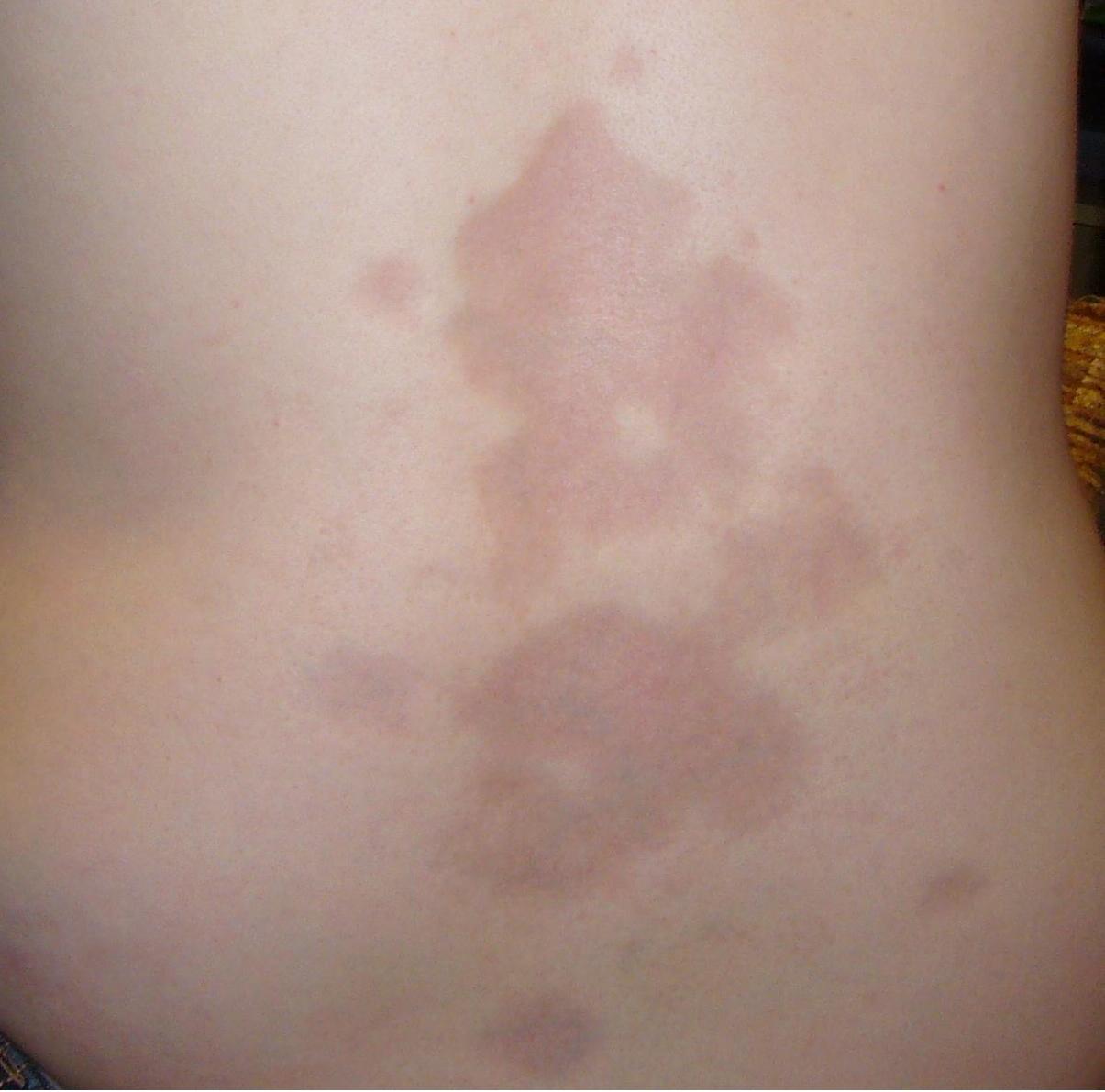
Leith C Jones at English Wikipedia, MercMorphea, CC BY 3.0, details on Wikimedia Commons