Foot & Ankle
Chronic Ankle Instability
According to statistics from the Federal Office for Accident Prevention (2015), almost every fourth sports injury, and almost every sixth injury in the household and during leisure time, occurs in the ankle area [4]. Therefore, injuries of the upper ankle joint are certainly among the most common sports injuries in sports traumatology [1–3].
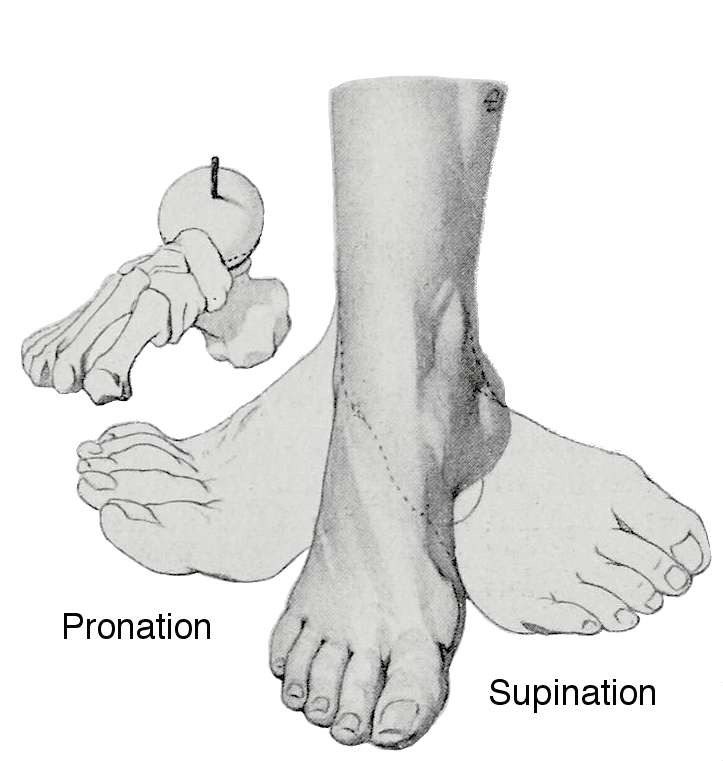
In most cases, this involves a supination trauma. With this injury, the foot twists inward across three axes of movement. In technical terms, this is referred to as plantarflexion, adduction, and inversion of the foot. Because of the severe stretching of the outer (lateral) ligament complex of the ankle, it is often overstretched and thus injured. There is a risk that this acute injury can develop into a chronic ankle instability as a long-term consequence.
You can find out more about the structure and anatomy of the ankle, as well as more about injury mechanisms, in our first blog post "Acute Supination Trauma, Ligament Injuries of the Foot".
The therapy as well as the symptoms can differ greatly between acute supination trauma and chronic ankle instability. In this post, we are focusing on chronic instability.
Chronification
The consequences of an acute supination trauma often only show up in the long term. On the one hand, the overstretched ligament structures no longer provide sufficient joint stability, and on the other hand, stretch signals for proprioceptive feedback to control the muscles are no longer triggered in time. Due to muscle overload, this can lead from an acute supination trauma to chronic ankle instability in 20-40% of cases [1,3].
Chronic Ankle Instability
Chronic ankle instability is characterized by recurrent supination traumas, persistent pain in the upper ankle, difficulty under load, a subjective feeling of instability, or difficulties walking (especially on uneven terrain) [1,5].
This instability can manifest itself mechanically and/or functionally.
Mechanical instability includes, among other things, pathological ligamentous insufficiencies and limitations following capsular-ligamentous injuries (e.g., due to scarring, poor wound healing), as well as a restricted range of motion in dorsiflexion (pulling the toes toward yourself).
Functional instability shows up through a muscular deficit and a subjective feeling of instability. The reason for this is, among other things, the deterioration of the proprioceptive neuromuscular potential, which leads to reduced joint control [1,6]. This was researched in a study as early as 1965: it was found that frequent ligamentous injuries of the ankle lead to a perceptual deficit, which has an impact on the surrounding muscles (reduced proprioceptive neuromuscular potential) [7].
Consequences of Chronic Ankle Instability
In 55% of cases, chronic ankle instability is the main cause of ligamentous post-traumatic osteoarthritis[8]. A retrospective study from 2019 shows that people with chronic ankle instability experience an earlier osteochondral lesion of the talus due to repetitive supination traumas [9]. This means that the bone which connects the lower leg and foot together shows premature arthritis, which can manifest as weight-bearing pain, swelling, and restricted mobility of the ankle joint. To prevent these consequences as much as possible, adequate treatment is recommended right in the acute phase. Otherwise, efficient treatment of chronic ankle instability is of great importance.
Therapy and Treatment of Chronic Ankle Instability
Therapeutic treatment is based on mechanical and functional aspects. This means that both mobility and motor control should be improved.
When treating mechanical instability, all joints of the foot, as well as the lower extremity, are tested for their mobility. The limitations found are then improved through active and passive mobilization so that the correct dynamic ankle biomechanics can be restored [10].
This can be done using manual techniques in osteopathy and physiotherapy.
Especially with chronic ankle instability, however, functional, active therapy and treatment should clearly be the primary focus!
In this, the goal is to be able to perform all activities without hesitation again, to lose the fear of bad movement, and to increase confidence in the joint. This mainly involves active exercises and training forms where coordination, balance, strength, endurance, and speed are trained. A continuous build-up is of great importance. This means starting with simple static exercises before increasing the level of difficulty with dynamic and more complex exercises. Another key point is that, over time, non-cyclic, sports-specific exercises are also incorporated to prepare the joint for real-world conditions during sports or everyday life [11].
Conclusion
Do not underestimate injuries caused by a supination trauma of the foot. Especially if you twist your foot often, you shouldn't take this lightly! An acute supination trauma can lead to chronic ankle instability, even though the injury might seem quite harmless at first glance! Get it checked out and consider adequate treatment to prevent long-term damage or pain.
Because premature arthritis in the ankle joint is a potential long-term consequence of an acute supination injury or chronic ankle instability of the foot in over half of all cases.
Even if you have been twisting your ankle for years and have loose ligaments, it is not too late to support yourself with a tailored therapy!
If you need us, we are gladly here for you!
Your BodyLab Team, your specialists for a stable ankle
Osteopathy and Physiotherapy | Rehabilitation and Training
Zurich Altstetten
References
1. Chronic instability of the upper ankle joint in sports – a review for sports physicians.
Valderrabano V, Leumann A, Pagenstert G, Frigg A, Ebneter L, Hintermann B.
Sportverletz Sportschaden. Dec 28, 2006;20(04):177–83.
Wikstrom EA, McKeon PO.
Journal of science and medicine in sport. 2017;20(4):356–61.
Wikstrom EA, Bagherian S, Cordero NB, Song K.
Journal of sport rehabilitation. 2018;1–4.
4. bfu_2.265.01_status 2015 – statistics of non-occupational accidents and safety levels in Switzerland.pdf.
5. Acute supination trauma of the upper ankle joint – a minor matter?
Leumann A, Tsaknis R, Wiewiorski M, Valderrabano
V. :3.
6. Leumann A, Frigg A, Pagenstert G, Ebneter L, Hintermann B, Dick W, et al. PREVENTION. Sports Orthopaedics and Traumatology Sport-Orthopädie – Sport-Traumatologie. September 2006;22(3):155–
7. The etiology and prevention of functional instability of the foot.pdf.
8. Ligamentous Posttraumatic Ankle Osteoarthritis.
Valderrabano V, Hintermann B, Horisberger M, Fung TS.
Am J Sports Med. Apr 1, 2006;34(4):612–20.
Ikoma K, Kido M, Maki M, Imai K, Hara Y, Ikeda R, et al.
Journal of Orthopaedic Science 2020 Jan;25(1):178-182. doi: 10.1016/j.jos.2019.02.003. Epub 2019 Feb 21
Hoch MC, McKeon PO.
Journal of orthopaedic research : official publication of the Orthopaedic Research Society. 2011;29(3):326–32.
11. acute_ankle_sprain_KNGF-Guideline.pdf.