The Essentials
Bone tissue

At best, most people think of fascia when they hear the word connective tissue, but they don't think of bones. Yet, bones are also a specialized form of connective or supporting tissue. Bone tissue is also composed of cells and a matrix. However, the unique difference compared to other connective tissues is that this matrix binds to minerals rather than water, which is typically the case elsewhere in our body.
What is bone tissue?
Bone consists of about 60% calcium salts, 30% (collagen) fibers, as well as 10% water and various cells. This high mineral content makes bone one of the hardest structures in our body. However, this mineralization makes diffusion processes impossible, meaning that the exchange and removal of metabolic waste products must take place via a highly branched vascular system. This is one reason why bone is so well-supplied with blood—and therefore relatively sensitive to pain, but also highly capable of regenerating and healing.
Functions of bone tissue
Bones perform highly versatile and essential functions for the human body:
they support us
they protect us (e.g., the rib cage protects internal organs)
they provide attachment surfaces for muscles and ligaments
they have a dynamic function as they form the joints
bones produce blood and stem cells in the red bone marrow
they store calcium and phosphate
Bone building and breakdown
Bone growth (including its formation and breakdown) is largely regulated by sex hormones. Testosterone, the male sex hormone, boosts protein synthesis and thereby stimulates bone cells to increase osteoid and bone formation. Along with men's genetically higher muscle mass pulling on the bones, this is one reason why men have thicker and stronger bones than women.
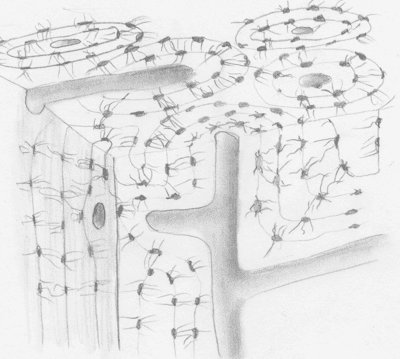
Estrogen inhibits cartilage growth at the epiphyseal plate and stimulates its ossification. As a result, longitudinal bone growth ends—usually earlier in women—making them generally shorter than men.
Osteoporosis & Co.
Immobilization—due to a wide variety of causes—leads to rapid, severe demineralization with pathophysiological changes in bone tissue, commonly known as bone loss or osteoporosis. Aging processes, the drop in estrogen production during menopause in women, as well as modern Western dietary habits are further causes that result in reduced bone strength. This excessive bone breakdown can lead to fractures (e.g., femoral neck fracture) or spontaneous fractures (e.g., vertebral body fracture) with sometimes devastating consequences.
What do our bones need?
Improving bone quality can be achieved by boosting mineralization. There is now a clear consensus that increased loading, such as strength training and axial loading (pressure on the bone), stimulates higher mineralization of bone tissue—resulting in greater stability. This is a powerful, active approach to preventing osteoporosis, even well into old age.
For healthy bone formation, we also need a balanced diet rich in calcium, Vitamin C (for collagen synthesis) and Vitamin D (which enables calcitonin absorption), as well as sunlight...
Philosophy: Life is movement.
Whenever you need us, we are here for you!
Your BodyLab Team, your go-to resource for everything related to connective tissue
Osteopathy and Physiotherapy | Rehabilitation and Training
Zurich Altstetten
Learn more about our hyaline joint cartilage in another blog post.