Shoulder
Shoulder Pain – Your Ultimate Partner for Stronger, Pain-Free Shoulders
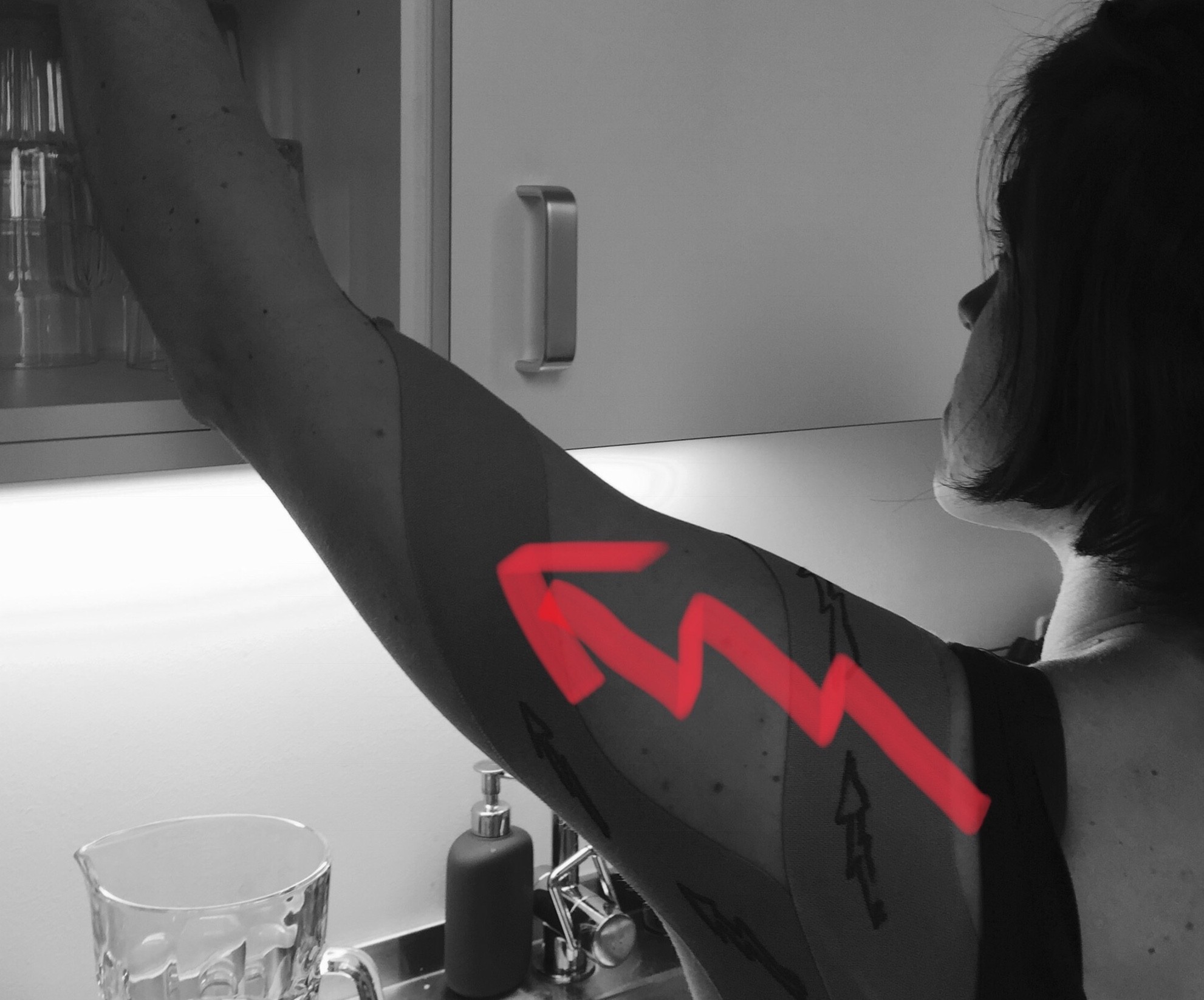
It often starts very slowly, but now your shoulder really hurts.
Especially when lifting your arm to get a glass out of the kitchen cupboard. Or when taking off your bra. Or when pulling up your trousers. Or when putting on a jacket. Or when brushing your hair. And then, at some point, at night too – particularly when you accidentally lie on the affected side. Sometimes the pain is greatest just before to just after shoulder height when lifting your arm out to the side. However, once your hand is overhead, the pain often eases off again.
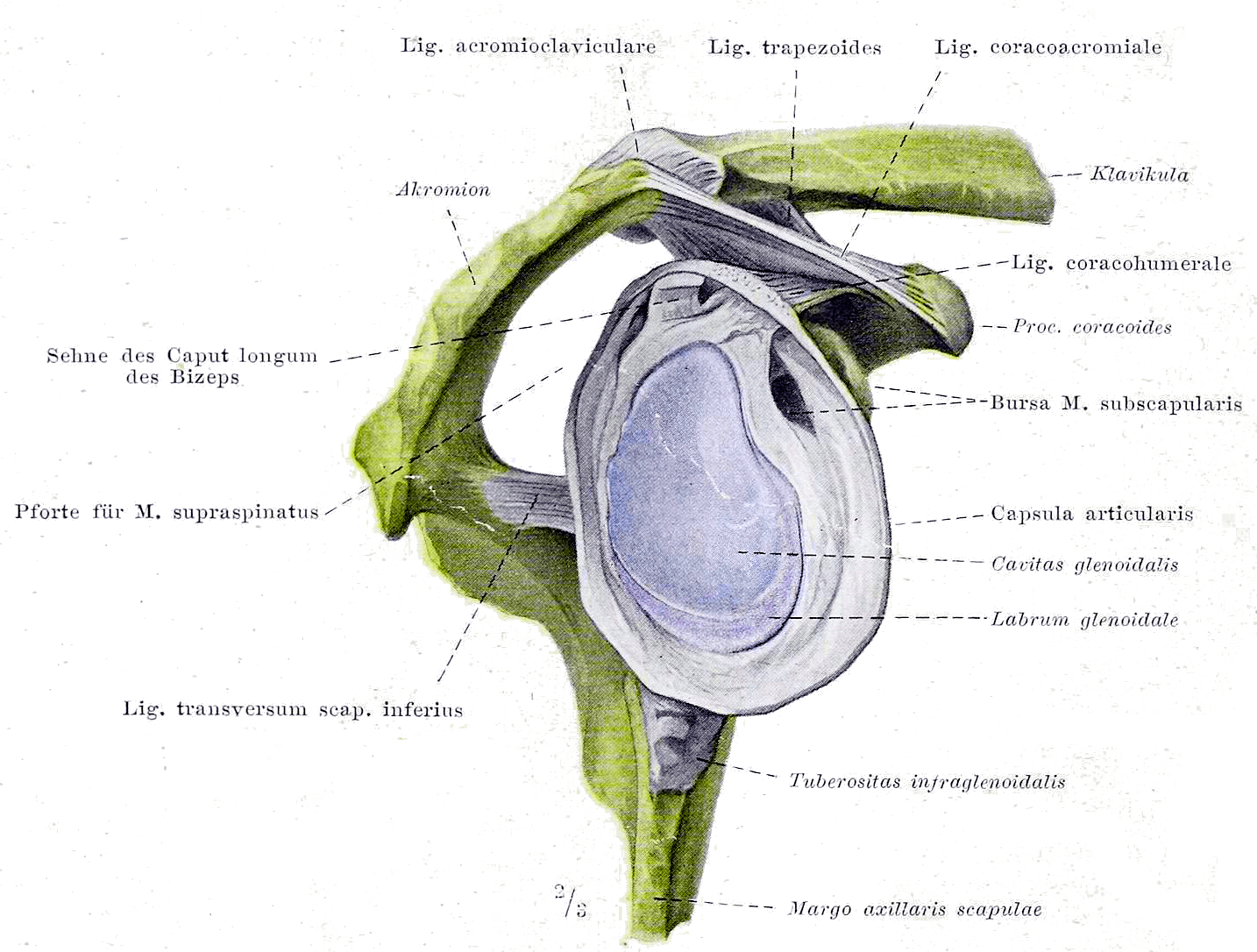
Braus, Hermann, Braus 1921 147, marked as public domain, details on Wikimedia Commons
The shoulder is one of the most complex joints in our body. That is because the shoulder joint does not only consist of the glenohumeral joint, but also the scapulothoracic articulation, the acromiohumeral joint, the acromioclavicular joint, and the sternoclavicular joint, as well as functionally the mobility of the thoracic spine. But internal organs and their fascial attachments, especially the diaphragm, can also have an influence on shoulder pain. For the shoulder complex to function optimally, a perfect interplay between all these individual joints is essential.
The root cause of shoulder pain often lies in a dysfunction of the movement pattern and the involved joints, as well as a muscle imbalance. This can stem from various causes – a fall or impact; your posture; too little exercise; too much exercise…
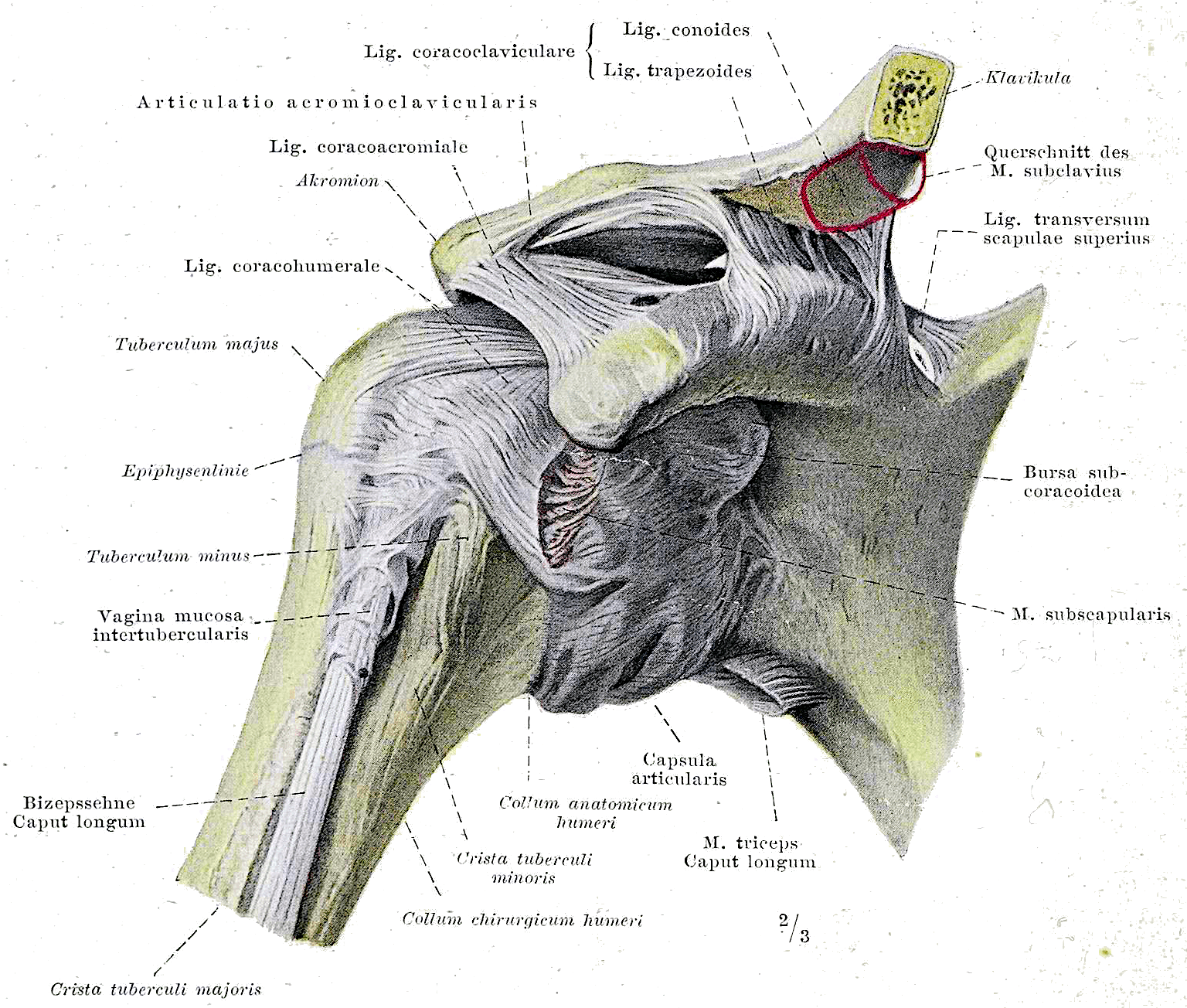
Braus, Hermann, Braus 1921 148, marked as public domain, details on Wikimedia Commons
Fundamentally, it doesn't matter at first what the cause is. At BodyLab | Osteopathy and Physiotherapy | Rehabilitation and Training | Zurich Altstetten, you are definitely in the right place.
After a holistic assessment to get to the bottom of your problem, we decide whether you are better suited for osteopathy or Physiotherapy. Most often, however, a combined approach is used, or further investigations and specialists are brought in.
If your pain stems from blockages in the thoracic spine (T-spine) or from shortened muscles and fascia in the chest and abdominal area that may cause postural issues, treatment by the osteopath is the initial focus. Using specific mobilization and manipulation of the thoracic spine, as well as fascial techniques, blockages are released and tissue mobility is restored.
In parallel, the physiotherapist starts the active rehabilitation. With targeted exercises for your shoulder and core, as well as fascial training, we work on your mobility, stability, and strength. Depending on your needs, the physiotherapist can also influence your pain using additional tailored techniques, such as Dry Needling.
What do you need to bring along? A bit of patience. And if possible, dedication and motivation. You'll get through this!
Whenever you need us, we are here for you!
Your BodyLab team, your shoulder specialists
Osteopathy and Physiotherapy | Rehabilitation and Training
Zurich Altstetten
You can find out more on our page about shoulder pain.