Jaw & Tinnitus Relief
Stress and the Jaw Joint

Mental Stress and Its Effect on the Chewing Muscles
Mental stress has a major impact on your body! Very often, this also shows up in your chewing muscles. Haven't you ever caught yourself unconsciously clenching your teeth in particularly stressful situations? Or you wake up at night because you are clenching or grinding your teeth so hard… And then you wonder why your cheeks feel so tense and you have pain in your tmj treatment or even in your teeth.
If you have experienced this yourself, it will definitely be worth reading on!
First, a definition: What is "mental stress"?
The term "stress" describes an unpleasant or even threatening state of imbalance between demands (social, professional, mental) and your resilience. Stress arises when the qualitative and quantitative demands placed on you are greater than your ability to cope with them. As a rule, people can handle stress well. It only becomes dangerous when you are permanently exposed to excessive strain or lack relieving factors. "Mental stress" refers to a stressful situation with increased mental arousal or emotionally triggered stress (e.g., the loss of a loved one).
This article focuses exclusively on negative stress, which is also known as distress.
The Importance of This Topic
According to the World Health Organization (WHO), stress is one of the greatest health hazards of the 21st century. If stress becomes chronic at some point, various symptoms can occur:
Unpleasant feelings such as anger, anxiety, and feeling overwhelmed
Physical effects such as increased muscle tension, high blood pressure, and an elevated heart rate
Changes in behavior such as forgetfulness and poor concentration
The consultation rate for Conditions of the musculoskeletal system among osteopaths is 80.9%, part of which involves the chewing muscles. To this day, it has not been scientifically explained how and why stress affects these muscles. What can be proven is that mental stress leads to an activation of the sympathetic nervous system, which has a certain influence on various body regions and thus possibly also on the chewing muscles. Theories related to human evolution also exist. In any case, it is frequently observed that many of those affected by stress-related headaches and tension in the chewing muscles are very likely suffering from chronic mental stress.
Because of the constant mental tension, those affected clench their teeth tightly together without realizing it, which leads to continuous activity of the chewing muscles, which in turn leads to tension when sustained over time.
Possible Symptoms and Their Consequences
It is important to seek help as soon as you feel such tension. The consequences can range from mild to severe:
Myofascial tension pain in the chewing muscles and further into the neck and shoulder muscles, which can radiate down to the upper body and along the spine
Headaches around the temples that can become chronic
Pain or problems in the tmj treatment, up to joint wear and tear
Migraine as well as drops in concentration
Receding gums
Gum inflammation
Loss of tooth enamel
Loosening and even loss of teeth
Therapeutic Approaches in Osteopathy and Physiotherapy
For osteopaths and physiotherapists, these muscles are a daily companion. Of course, they cannot simply make your stress vanish. It remains your task to identify and address the stress triggers.
However, they are very skilled at treating the consequences, with the goal of:
relieving the Conditions (see above)
reducing pain
counteracting progressive tissue destruction
They can bring you relief by working directly on the affected chewing and head muscles and releasing the myofascial structures through stretching or massage techniques. Dry Needling is also a very effective method to treat and eliminate painful trigger points in the area of the tmj treatment. The fascia connected to the jaw is released, and tension on the joint and head is normalized.
Using manual joint techniques, the tmj treatment can also be treated directly, reducing and improving any restrictions in movement.
In addition, a physiotherapy or osteopathic treatment always includes education and guidance on the mechanisms behind the symptoms and triggers. Often, you experience pain without being aware of the cause. Thanks to their broad knowledge of the processes and interactions within the human body, therapists can provide important educational work and help you become aware of the root problem. Developing changes in how you handle stress factors is an essential step in successful therapy.
However, that is where you need to take action and actively participate to counteract bad, unhealthy stress and break old patterns.
Relaxation, breathing, or mindfulness exercises can be developed together with your physiotherapist and help improve your Conditions.
Whenever you need us, we are here for you!
Your BodyLab team, your specialists for jaw- and stress-related Conditions
Osteopathie und Physiotherapie | Rehabilitation and Training
Zurich Altstetten
Find out more on our page TMJ therapy.
Cover Image Credit
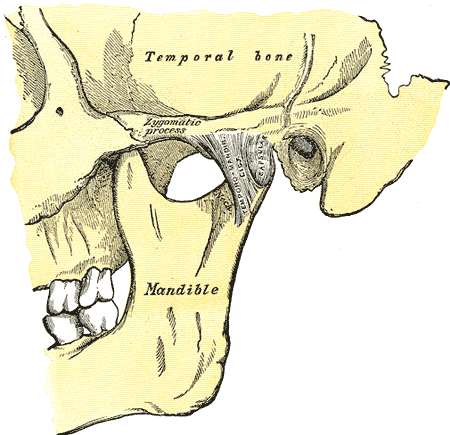
Henry Vandyke Carter creator QS:P170,Q955620 Henry Gray creator QS:P170,Q40319, Gray309, marked as public domain, details on Wikimedia Commons