The Essentials
Viruses, bacteria, parasites, and their counterparts
Pathogens and Germs
The coronavirus (COVID-19) has occupied the entire world—and us here in Switzerland—for well over a year now. As the name suggests, SARS-CoV-2 belongs to viral infections. But what exactly are viruses? And what is the difference between them, bacterial infections, and parasites? How are they treated? What actually works?
Transmission and Infection
Becoming infected with any type of illness can happen in several ways. The best known and most widespread is droplet infection: when you breathe, speak, and especially cough or sneeze, viruses and bacteria attached to tiny droplets are released into the air (aerosols) and inhaled by others. This is how these pathogens spread from person to person.
However, smear and contact infection also poses a major risk. Pathogens are left behind on surfaces (door handles, handrails on public transport, etc.), and countless other people can become infected simply by touching these objects [1].
Furthermore, pathogens can be passed on through body fluids (blood, saliva, sexual fluids, etc.). During sexual intercourse, various illnesses can be transmitted—such as the bacterial pathogens causing syphilis and gonorrhea, or viral pathogens causing herpes, hepatitis B, and HIV [1].
In addition, food and drinking water remain common sources of infection, especially in poorer countries. In food, for example, this includes Salmonella (bacteria) or hepatitis A pathogens (virus), which cause diarrhea. The most well-known example of drinking water as a source of infection is cholera (bacterium).
So while some pathogens can only be transmitted in one specific way, others can spread through multiple routes. The best example of this is E. coli bacteria. They can be transmitted via contaminated food (especially meat), contaminated water, and even from person to person [1].
Some infectious diseases are transmitted exclusively from person to person (e.g., measles). Diseases transmitted from animals to humans are called zoonoses [1]. The most common animal carriers are insects. Here, the Anopheles mosquito—as the actual host of malaria (parasite)—as well as the yellow fever mosquito and the Asian tiger mosquito (transmitting dengue fever and other life-threatening tropical fevers) are among the best-known sources of zoonoses. But insects can also transmit pathogens in our latitudes: ticks can transmit tick-borne encephalitis (TBE, a viral infection), which is a potentially life-threatening inflammation of the brain and meninges, or Lyme disease (a bacterial infection) [2].
Besides insects, birds are the second most important carriers of zoonoses (avian flu).
Infected Doesn't Necessarily Mean Sick
Whether a virus or bacterium attacks your body, your immune system responds with a complex and sophisticated defense mechanism: it attacks the foreign cells.
If your body wins relatively easily and quickly, resolving the situation without much fuss, you won't get sick and won't feel much of anything.
Important: under certain circumstances, you can still be contagious because you carry the disease within you, even if you never get sick from it!
If the pathogen load is too large or too complex for your body's defenses (it can't react fast enough), or if your body detects them too late, the pathogens can spread and infect you: you get sick and develop symptoms. Fever supports this immune defense, and as soon as the pathogens are brought under control and decimated, you start feeling better and recover.
It is impossible to predict exactly who will get sick, when, or why—because not everyone gets sick! It depends heavily on your specific, individual immune system. It also depends on the number of pathogens (germ load) and how dangerous the pathogen is.
Viral Infections

US government, Infectious bronchitis virus, marked as public domain, details on Wikimedia Commons
Viruses are by far the most significant causes of upper respiratory tract infections and diarrheal illnesses.
Viruses are very simply structured particles consisting only of a strand of genetic information (DNA/RNA) and a few protein cells. Because of this, viruses do not have their own cell or metabolism, meaning they are not independent living organisms.
Schematic structure of a virus:
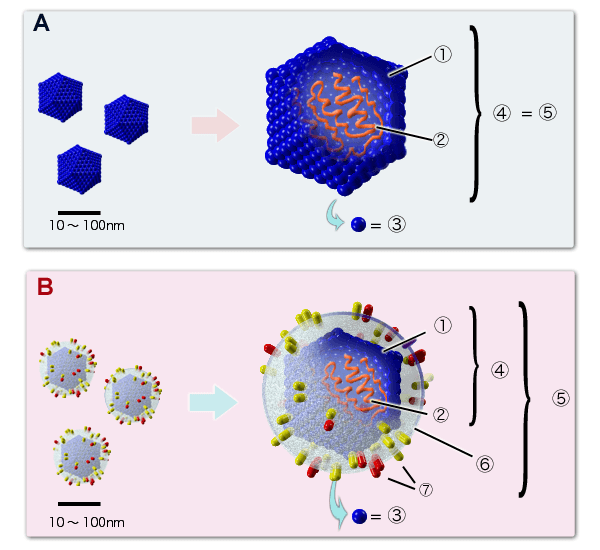
Y_tambe, Virion, CC BY-SA 3.0
Viruses invade animal, plant, and human organisms and look for a host cell to reproduce. However, certain viruses can also survive on surfaces for some time. If they don't find a host cell to reproduce, they eventually die off. It's important to note that not all viruses that invade our bodies actually make us sick. Your immune system often reacts very quickly and fights off the pathogens successfully [3].
As soon as a pathogen enters your body, you are infected and can transmit the virus to others—EVEN WITHOUT SHOWING SYMPTOMS OR FEELING SICK! With viral infections, this often happens through close, direct contact, especially in enclosed spaces, via coughing, sneezing, or shaking hands. But it also happens through indirect contact, like door handles, handrails on buses/trams/trains, etc., because viruses can survive on surfaces for some time, as mentioned.
Once inside your body, the invading viruses immediately look for a host cell and dock onto it. Red and white blood cells, liver cells, muscle cells, etc., often serve as host cells. The viruses release their own DNA/RNA inside the host cell, which is then forced to reproduce more virus particles instead of its own human cell material. The virus material produced by your own cells can then be released into your body to infect even more cells. The original host cell dies, and the viruses disperse throughout the body, docking onto new host cells [3].
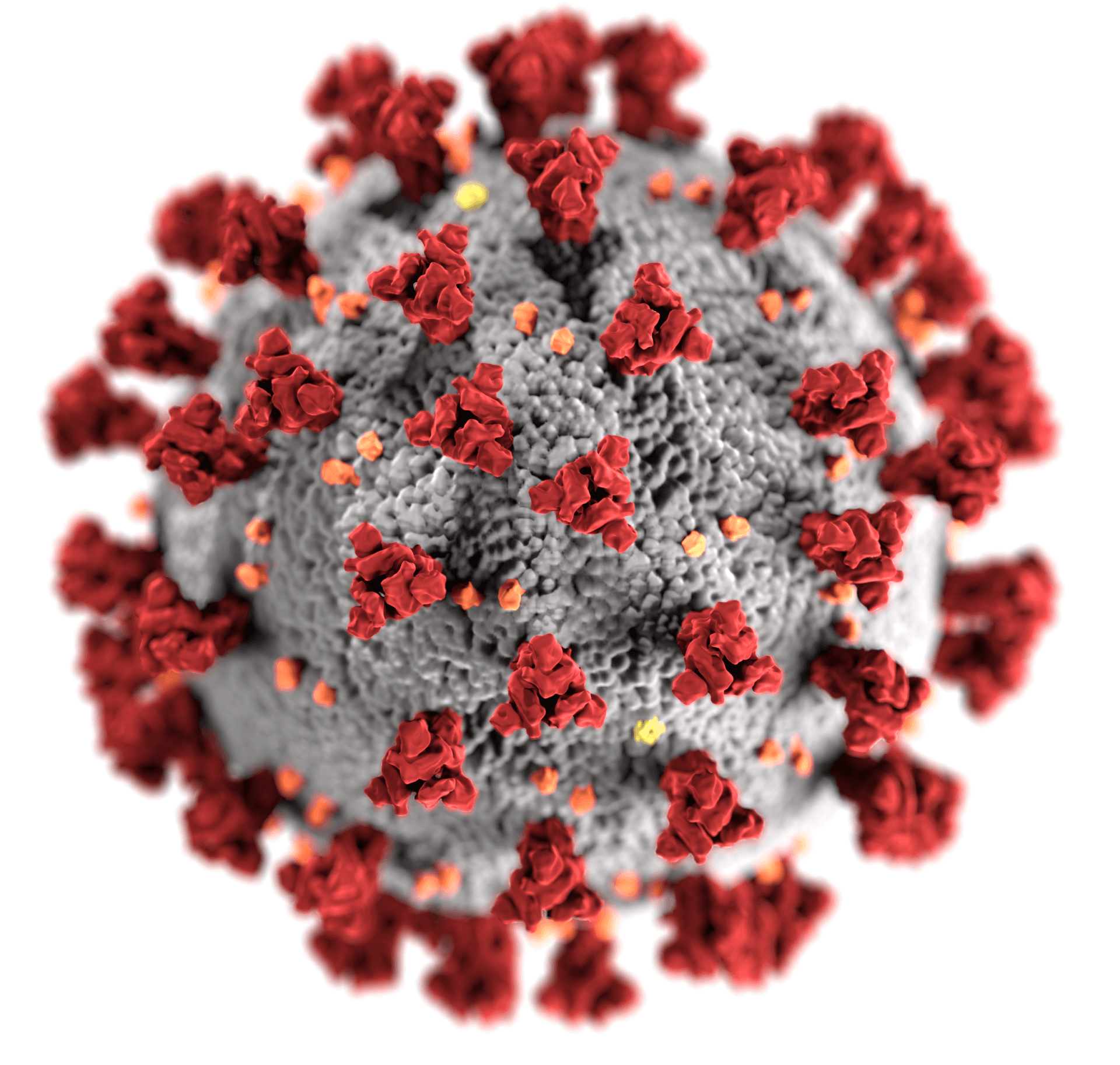
CDC/ Alissa Eckert, MS; Dan Higgins, MAM, 2019-nCoV-CDC-23312, marked as public domain, details on Wikimedia Commons
Viral infections can often trigger very harmless illnesses like a common cold. Your body and immune system can usually handle this type of viral infection quite well. But seasonal flu (influenza) is also a viral infection and can be quite dangerous, especially for vulnerable or weakened individuals [4]. Furthermore, there are certain viral diseases that become chronic and drag on for years—HIV, hepatitis, or herpes.
Due to their simple structure and lack of metabolism, viruses are immune to antibiotics [5]. Modern medicine has developed virus-specific drugs (e.g., annual flu shots, HIV medications); however, it is rarely possible to completely eradicate a virus with medication if your immune system cannot cope with it on its own. An example is HIV medications, which keep HIV under control for a lifetime but cannot destroy it entirely.
Bacterial Infections
Unlike viruses, bacteria are single-celled microorganisms. They are independent microscopic living organisms and can generally be combated with the help of antibiotics.
Schematic structure of a bacterium:
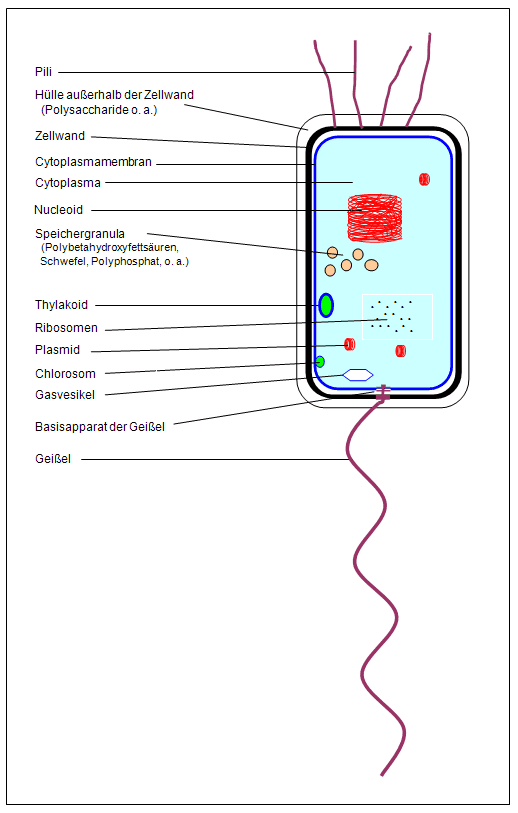
Brudersohn, BakteriumSchema, CC BY-SA 3.0 DE
It's important to note that not EVERY bacterium makes you sick. On the contrary! Many bacteria are vital for your survival, such as those in your gut flora or oral mucosa. Only about 1% of all bacteria cause illnesses in humans. However, if these penetrate your system, they can cause serious harm [6].
Similar to viruses, bacteria can be transmitted via droplets (respiratory tract and mucous membranes) and smear infections, but also via the urinary tract, the gastrointestinal tract, and through the skin when injured. Common bacterial infections include pneumonia (pneumococci: a type of Streptococcus pneumoniae), meningitis (meningococci: Neisseria meningitidis), whooping cough (Bordetella pertussis), urinary tract infections, salmonellosis (Salmonella serotypes), and tuberculosis (Mycobacterium tuberculosis). When you sustain injuries, bacteria can also lead to wound and soft tissue infections [6].
In general, bacterial infections can be effectively combated using antibiotics. Antibiotics can either prevent bacteria from multiplying or destroy them directly. For instance, antibiotics can prevent bacteria from producing a new cell wall during cell division. Without this protective coating, the bacterium bursts. Alternatively, protein biosynthesis is blocked, causing the bacterium to die.
In recent years, antibiotic-resistant bacteria have increasingly been discovered—so-called multi-resistant, highly dangerous, and aggressive bacteria (e.g., MRSA). These pose a threat to public health and are reportable in Switzerland. A key reason for the development of resistance is the often unnecessary use of antibiotics—not only in medicine, but also in livestock farming. The exchange of genetic material between bacteria can also lead to resistance [5].
Especially in hospitals, these resistant germs are a growing problem and can lead to severe complications after surgery.
Parasites
Parasites include fleas, tapeworms, and head lice, among others. Often, parasites are harmless and don't cause disease. For example, head lice bite into your scalp several times a day and cause annoying itching, but they can easily be treated with chemical remedies. Tapeworms can also often be treated easily with medication [7].
A hookworm:
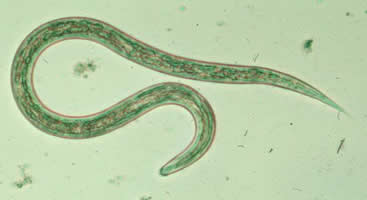
DPDx Image Library, Hookworm larvaG, marked as public domain, details on Wikimedia Commons
In our latitudes, ticks are probably the most dangerous parasite. With a tick bite, Lyme disease pathogens or the TBE virus can enter your bloodstream and cause inflammation of the meninges or the brain. However, not every tick is a carrier, and not every infected tick will pass it on to you. You can protect yourself best by wearing appropriate clothing when walking in the woods during spring and summer [2].
Besides ticks, fleas also transmit diseases. In the 14th century, fleas were the main cause of the spread of plague bacteria.
In tropical regions, the Anopheles mosquito is among the most dangerous parasites, transmitting plasmodia when it bites, which causes malaria, for example.
Along with bites and stings, parasites (especially worms) are also transmitted through contaminated food, intensive contact with animals, or contaminated sand in playgrounds. Here, the worms enter your digestive tract through your mouth and mature there. Washing your hands regularly and thoroughly can prevent worm infestations.
Animals in general are often an intermediate host for parasites. Fleas, worms, or insects find their way to you via dogs, cats, etc. That's why it's important for pet owners to deworm their pets regularly and use suitable products to prevent flea and tick infestations [7].
Whenever you need us, we're here for you!
Your BodyLab team, your specialists after physical injuries
osteopathy and Physiotherapy | Rehabilitation and Training
Zurich Altstetten
References
[1] https://www.gesundheitsforschung-bmbf.de/de/wie-keime-sich-ausbreiten-6432.php
[2] https://www.bag.admin.ch/bag/de/home/krankheiten/krankheiten-im-ueberblick/borreliose-lyme-krankheit.html
[3] https://www.infektionsschutz.de/infektionskrankheiten/erregerarten/viren.html
[4] https://www.gesundheitsforschung-bmbf.de/de/infektionen-6299.php
[5] https://www.bag.admin.ch/bag/de/home/krankheiten/krankheiten-im-ueberblick/antibiotikaresistente-bakterien.html
[6] https://www.infektionsschutz.de/infektionskrankheiten/erregerarten/bakterien.html
[7] https://www.infektionsschutz.de/infektionskrankheiten/erregerarten/parasiten.html
Cover Image Credits
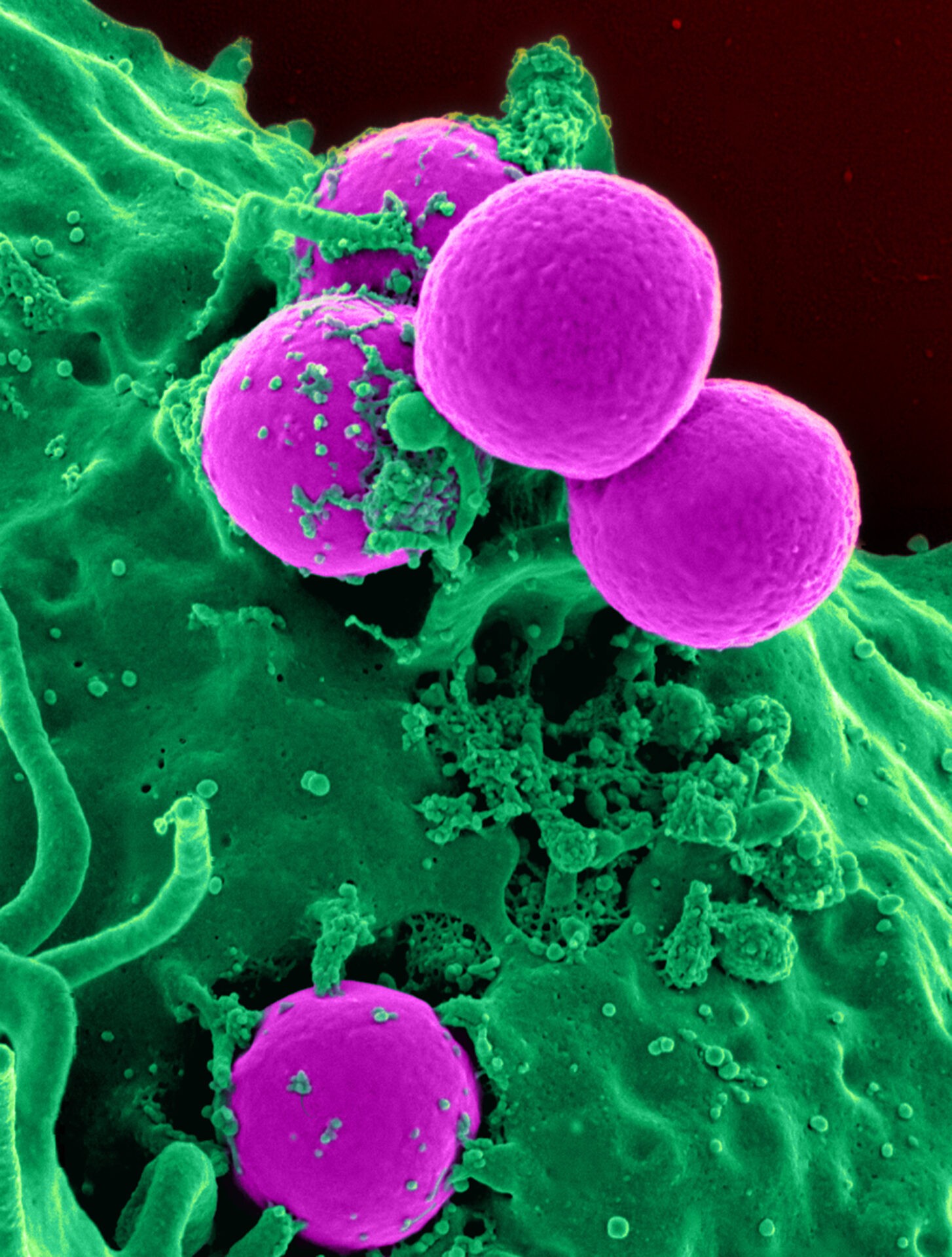
National Institutes of Health (NIH), Human neutrophil ingesting MRSA, marked as public domain, details on Wikimedia Commons