Mindset
Pain - The Transmission
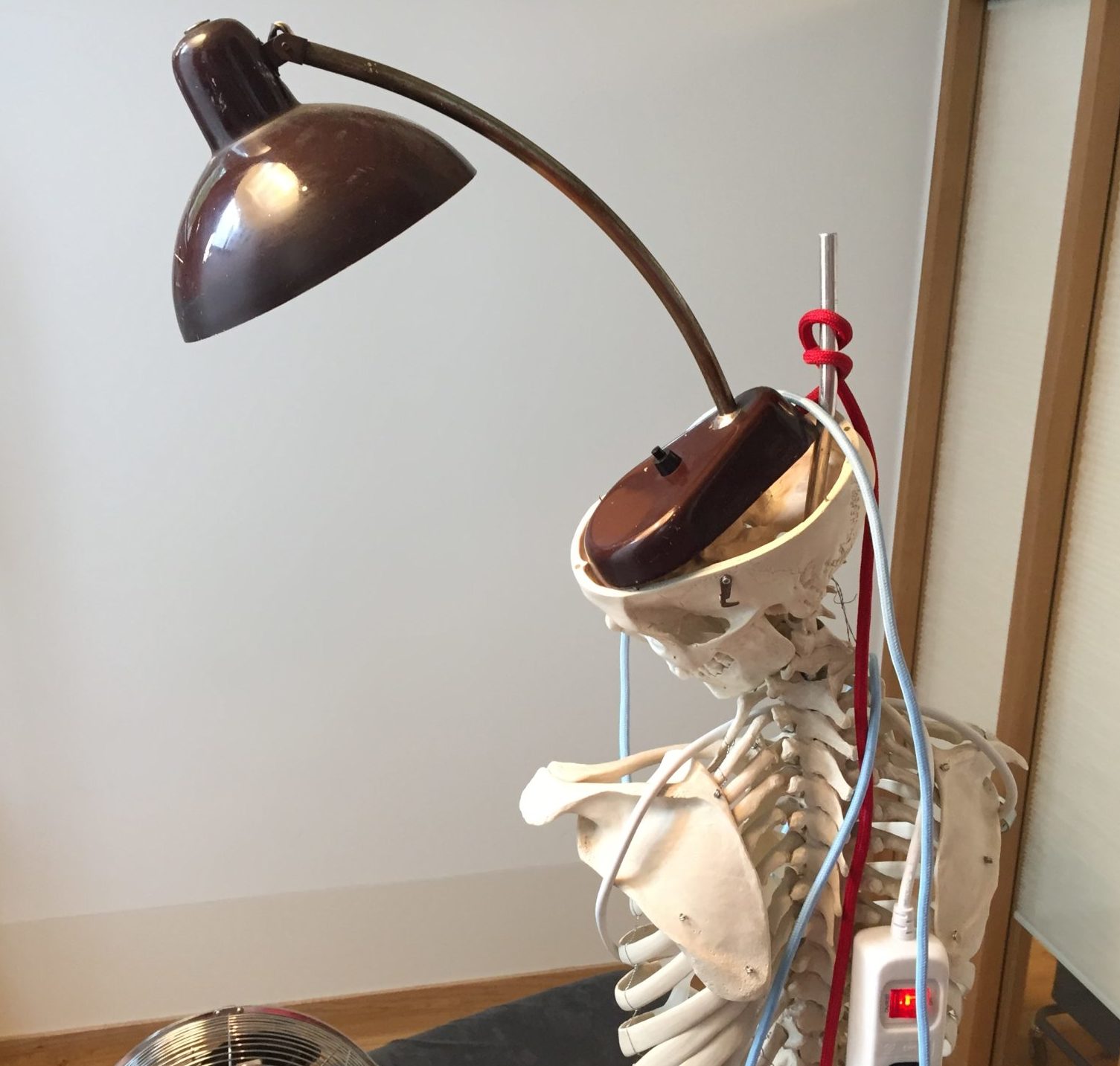
In the previous blog, pain was described as a reaction to actual and potential tissue damage. Actual tissue damage is easy to understand – a cut finger, a broken leg, etc. But what is meant by potential tissue damage, and how does the brain perceive pain?
Sensors, called receptors, are located all over our body at the ends of our nerves, inside the neurons. These receptors are specialized to react to specific stimuli – for example, to mechanical influences, like a blow; to thermal influences, like heat and cold; and others react to chemical influences from the outside and from the body itself, like stinging nettles or lactate.
When you stub your little toe on the table, the mechanical receptors of the neuron in that area open up, allowing positively charged particles from outside to flow in and trigger an electrical impulse. This impulse is guided along the nerve pathways to the spinal cord, where it is redirected and flows up to the brain. These nerves also have specializations – certain pathways transmit at speeds of up to 150 km/h, while others transmit at just 1 km/h. This means that the information reaching the brain is highly filtered. Crucially, the information transmitted is not "pain" itself, but rather "danger in this area." The pain itself is ultimately constructed by the brain, combined with information from the eyes (light receptors), ears (sound wave receptors), and nose (smell receptors) – this interplay is our ultimate warning system against potential danger.
The system works exactly the same way with potential tissue damage. Imagine holding your hand too close to a fire. The thermal receptors in your hand open up and the information "temperature increase in the hand" is forwarded to your brain. You pull your hand back instantly! Yet, no tissue damage has occurred, but you still perceive it as pain. Combined with your memory, your brain anticipates the potential burn and sends the necessary signals to your muscles for an immediate reaction.
How can a light bump sometimes cause no pain, and other times be highly painful? Our entire alarm system is a bit more complex than described above.
The neuron only knows an all-or-nothing function. When the receptors on the neuron open and the electrical particles flow in, the neuron is stimulated. However, a certain level of stimulation must be reached for the neuron to pass on the impulse. This level is called the excitation threshold – if this is exceeded, the neuron fires a single action potential, which travels along the nerve to the spinal cord.
If the neuron is in a neutral or resting state and you lightly bump your elbow on the door frame, you will most likely feel no pain. However, let's assume you already have a bruise on your elbow and you get touched there – you will almost certainly feel pain. This is because the area around the elbow is already sensitized. Warmth and chemical messengers from the inflammation have opened the thermal and chemical receptors of the neurons in that area, and electrical particles have entered – but the excitation threshold has not yet been crossed. The touch (mechanical influence) is the final drop that overflows the bucket – an action potential is triggered.
Once the action potential reaches the spinal cord, it is transferred to a new nerve pathway leading to the brain. The nerve from the periphery (in this case, your elbow) releases a very specific mix of chemical substances into the gap between the peripheral nerve endings and the central nervous system (spinal cord). The endings of the central nervous system in turn have neurons with respective receptors that are only opened by specific chemicals. Simply put, if the elbow nerve releases round chemicals, only spinal cord neurons specialized for round chemicals will open – the lock-and-key principle. If the excitation threshold of the new neuron is exceeded, a new action potential is conducted via the spinal cord to the brain. Only then do we perceive the information as pain.
However, not every action potential makes it to the brain. The first sorting of information happens during the switch from the periphery to the central nervous system. If chemicals flood the gap, the system can become overstimulated – every neuron would fire and trigger a new action potential. But nerve pathways coming down from the brain also end in this gap. These nerves release a cocktail of feel-good hormones into the space, which calms the situation down. The brain blocks the transmission of a new action potential.
This cocktail can be up to 60 times stronger than any injection or painkiller. This explains why an ultra-marathon runner [1], who dislocated and popped his shoulder back in at mile 26, can still finish the remaining 160km and win the race.
If you need us, we are always here for you!
Your BodyLab Team, your specialists for physical complaints
Osteopathy and Physiotherapy | Rehabilitation and Training
Zurich Altstetten
Bibliography
[1] https://www.denverpost.com/2017/07/15/hardrock-100-2017-kilian-jornet/