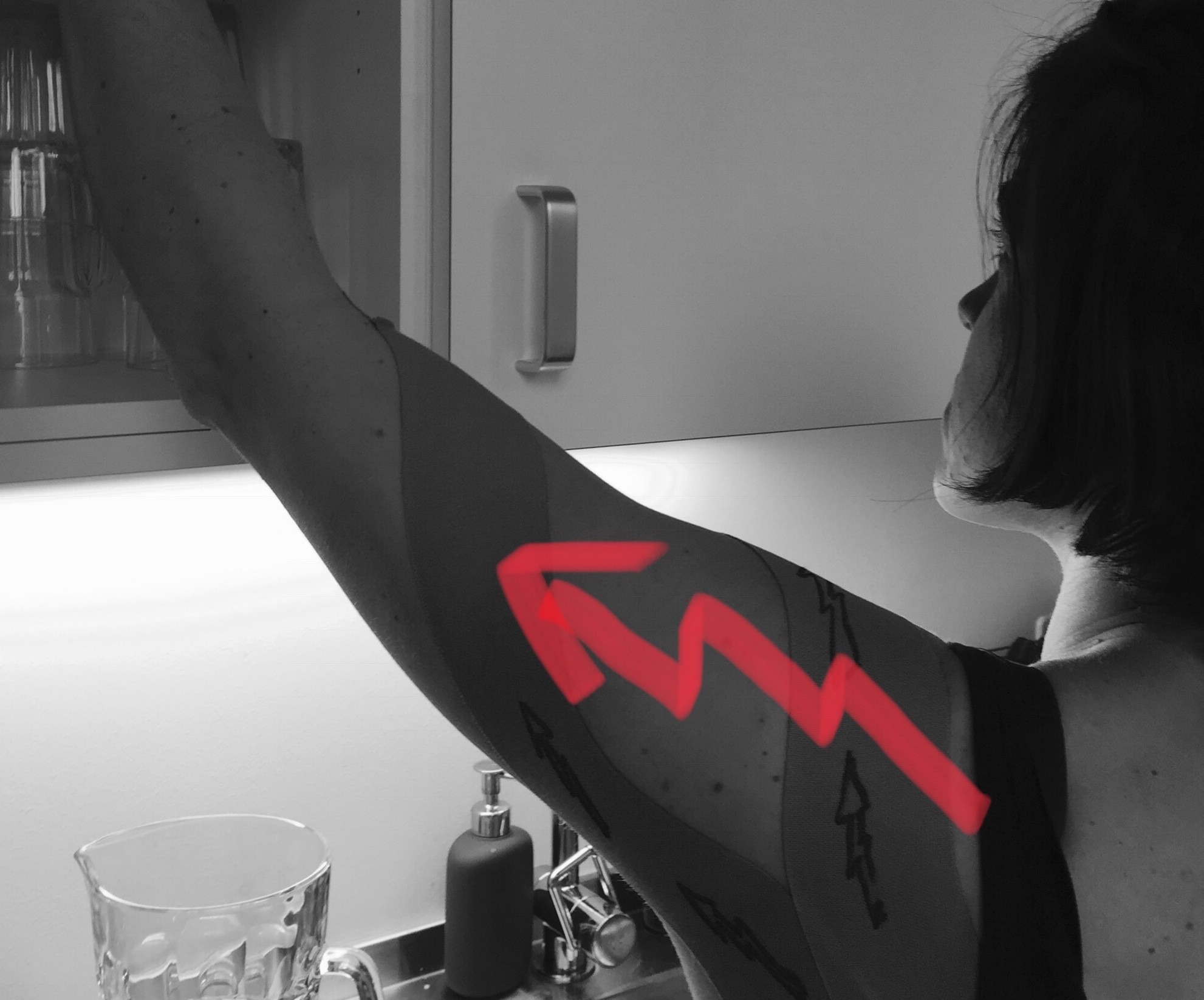
It stings when you lift your arm to the side, overhead work becomes a test of patience, and at night you cannot lie on the shoulder: these are the typical signs of shoulder impingement. At BodyLab in Zurich Altstetten, we treat impingement where research sees the greatest leverage: with targeted, progressive training rather than rest.

What is shoulder impingement?
Impingement literally means pinching: space becomes tight under the acromion (shoulder roof) for tendons and bursae. In medical terms, it is now mostly referred to as subacromial pain syndrome—pain in the space under the shoulder roof. In fact, purely mechanical pinching is rare; usually, a tendon of your rotator cuff, the muscle group guiding your shoulder joint, is irritated and overloaded. A classic sign is the painful arc: lifting your arm hurts mainly in the mid-range of motion, while it feels better below and above that. This often leads to a vicious cycle: tendon and bursa react to the irritation with inflammation and swell, this swelling makes the already narrow space under the shoulder roof even tighter, and that further intensifies the irritation. Breaking this cycle is the first step in any treatment.
How it happens
Repetitive overhead strain in sports or work, such as volleyball, swimming, painting, or rapidly increased training intensity
Strength deficits and altered scapular control that fail to center the humeral head properly
Posture and mobility, such as a stiff thoracic spine or shortened capsule tissues
Anatomical factors such as the shape of your shoulder roof; sometimes a calcific deposit is behind it.
Usually, multiple factors interact. During your assessment, we will pinpoint exactly which ones apply to you.
Treating impingement: training instead of rest
The research is clear: active, progressively increased training is the first-choice treatment in the long run and achieves results comparable to surgery in many cases. But the order matters: first calm the irritation, then build up.
Assessment: We evaluate your mobility, strength, and scapular movement, and confirm whether the pain really originates from the space under your shoulder roof.
Calming the irritation: Adjusting your load instead of stopping completely: We define with you what you can keep doing and what needs a temporary break. manual therapy and Dry Needling complement this if myofascial trigger points—hardened spots in the muscle—are involved.
Building resilience: As soon as the irritation settles, we build up specifically in Physiotherapy: your rotator cuff and the muscles guiding your shoulder blade, right in our in-clinic gym area.
osteopathy: looks closely at your scapular control, thoracic spine, and the overall biomechanics that can contribute to the tightness under your shoulder roof.
No single method is superior to another: when booking, you choose a starting point, and if the other discipline suits you better, we'll guide you directly there. If you've had surgery, we support you in your rehab after shoulder surgery.
When to consult your doctor
Shoulder pain is rarely dangerous. However, you should seek immediate medical evaluation if you experience any of these signs:
A fall or accident resulting in a significant loss of strength or a visible deformity: a possible tendon tear or dislocated shoulder, both of which require immediate medical assessment.
A fever accompanied by a hot, swollen joint: a potential sign of a joint infection.
Numbness, tingling, or paralysis in your arm or hand: nerves may be involved.
These signs are rare. If none of them apply to you, nothing is holding you back from starting your treatment with us.
Who covers the cost? Let's talk investment in your future.
Physiotherapy is covered by basic insurance with a doctor's referral, or after an accident by accident insurance or your health insurance's accident coverage. You can book osteopathy directly, without a referral; most supplementary insurance policies for alternative and complementary medicine contribute to the costs, and depending on the insurer, this also applies after an accident.
It is best to clarify directly with your insurance provider beforehand how much they will cover.
Whether it is Physiotherapy or osteopathy: you are always welcome as a self-payer, and this does not change anything about your treatment.
You can find the cost of your treatment under Rates and cost coverage.
The acute irritation can settle down—even on its own—once you break the cycle of inflammation, swelling, and tightness. Whether the discomfort returns depends on the underlying causes, which are unique to everyone. And that is exactly where your targeted treatment steps in.
Which path is yours to conquer?
Three quick questions, and you'll know exactly where to start. Immediate support needed? Call us: 044 545 03 03