Knee
Meniscus Injuries in Arthritic Knees: To Arthroscopy or Not?
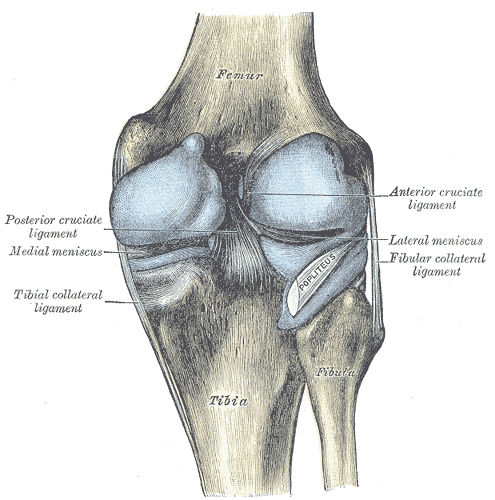
Modern imaging techniques like MRIs frequently reveal meniscus tears in middle-aged or older individuals who suffer from osteoarthritis and knee pain. When dealing with knee issues and pain associated with arthrotic-degenerative changes combined with meniscus signs or symptoms, arthroscopic surgery on the meniscus is widespread and often considered the primary standard medical option. According to current literature, an estimated 4 million knee arthroscopies are performed worldwide every year.
As manual therapists, we naturally ask ourselves whether surgery is truly always the immediate necessary step. And how much better is the outcome afterwards? Was it really worth it? What exactly has improved? What aspects of recovery can surgery influence the most?
This question isn't simple to answer. Knee pain can stem from many different, mutually influencing causes. Plus, distinguishing the clinical symptoms of meniscus lesions from osteoarthritis is no easy task. [1]
In medical science, clinical trials and studies investigate the effectiveness of various interventions and treatment methods. It is crucial here that we compare apples to apples: only identical types of injuries should be measured against one another.
That is why the correct medical diagnosis at the start is absolutely key: if this is incorrect or misinterpreted, the overall result cannot be guaranteed, as an inappropriate therapy method might be chosen. These factors make it challenging in medicine to gather clean, precise, and truly meaningful studies.
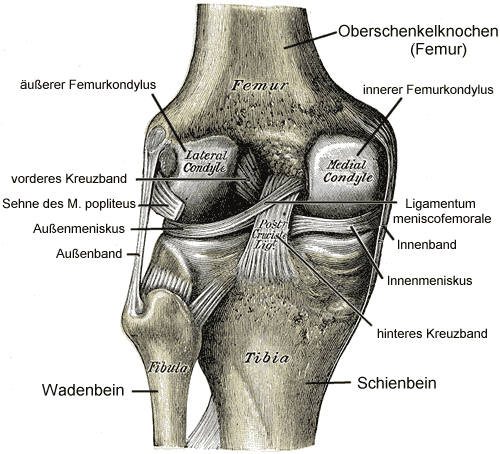
Henry Vandyke Carter Henry Gray, Gray348-de, marked as public domain
Additionally, humans are the central focus of these studies. Each individual brings unique physiological conditions that influence the exact prognosis of their healing process—whether recovering from an injury or surgery. This requires clear and correct inclusion and exclusion criteria for the study subjects (diagnosis, age, gender, severity of symptoms, range of motion, duration of symptoms, etc.), a sufficiently large and representative population size (with a corresponding control group), and properly applied statistical techniques and methods to produce evidence-based recommendations.
At BodyLab Osteopathy and Physiotherapy, we have searched the medical literature for reviews and meta-analyses to get a clear picture of the current state of research. We focused on four papers dealing exclusively with degenerative changes in the knee (meaning non-traumatic injuries!).
Right from the start, we can see that the studies do not produce one-size-fits-all results. In our specific case, as mentioned, it is not always easy to differentiate and diagnose meniscus issues apart from degenerative arthrotic knee problems. [1]
Based on our selected papers, the following evidence seems to apply to meniscus tears in an arthritic or degeneratively altered knee:
Regarding pain relief and mobility, there is no significant difference in long-term outcomes between arthroscopic surgery and conservative treatment through physiotherapy. [2]
It appears there is no clear added benefit of an arthroscopic procedure compared to conservative physiotherapy treatment. [3, 4]
A conservative approach should always be the first line of treatment. Opting for surgery at a later stage after starting physiotherapy does not negatively affect long-term recovery and does not delay healing [4]
However, it appears that certain contributing factors can significantly hinder the success of a knee arthroscopy for degenerative meniscus tears: for example, the duration of pain (> 1 year), the involvement of knee osteoarthritis, and how much of the meniscus needs to be removed. [5]
Degenerative changes (arthrosis and arthritis) that occur with age are a primary diagnosis and a very common source of knee pain. And as stated before, distinguishing clinical symptoms of meniscus lesions from osteoarthritis is highly complex. [1]
This is crucial to keep in mind, because with arthritis, the anatomical proximity and function of the menisci (see our Meniscus blog) means they are usually also affected and damaged—affecting the entire functional joint unit. In fact, age-related meniscus changes often go hand-in-hand with knee osteoarthritis!
A conservative approach aimed at achieving full mobility of the knee joint combined with targeted muscle building often forms the foundation of a successful recovery, even if it is interrupted by surgery. Therefore, as physiotherapists and osteopaths, we highly recommend starting with a conservative approach whenever possible and not rushing too quickly or too early into surgery.
If you need our support, we are always here for you!
Your BodyLab Team, your partners for a strong, resilient knee without hasty surgery
Osteopathy and Physiotherapy | Rehabilitation and Training
Zurich Altstetten
References
[1] The role of the meniscus in knee osteoarthritis: a cause or consequence?
Englund M, Guermazi A, Lohmander SL
Radiol Clin North Am 2009; 47:703–712.
Brignardello-Petersen R, Guyatt GH, Buchbinder R, Poolman RW, Schandelmaier S, Chang Y, Sadeghirad B, Evaniew N, Vandvik PO.
BMJ Open. 2017 May 11;7(5):e016114. doi: 10.1136/bmjopen-2017-016114.
Khan M1, Evaniew N, Bedi A, Ayeni OR, Bhandari M
CMAJ. 2014 Oct 7;186(14):1057-64. doi: 10.1503/cmaj.140433. Epub 2014 Aug 25.
[4] The METEOR trial: no rush to repair a torn meniscus.
Hwang YG, Kwoh CK
Cleve Clin J Med. 2014 Apr;81(4):226-32. doi: 10.3949/ccjm.81a.13075.
[5] Can we predict the clinical outcome of arthroscopic partial meniscectomy? A systematic review.
Eijgenraam SM, Reijman M, Bierma-Zeinstra SMA, van Yperen DT, Meuffels DE.
Br J Sports Med. 2018 Apr;52(8):514-521. doi: 10.1136/bjsports-2017-097836. Epub 2017 Nov 28.
Cover Image Credit
Henry Vandyke Carter Henry Gray, Gray352, marked as public domain, details on Wikimedia Commons
All images used here have been marked as public domain, further details on Wikimedia Commons.