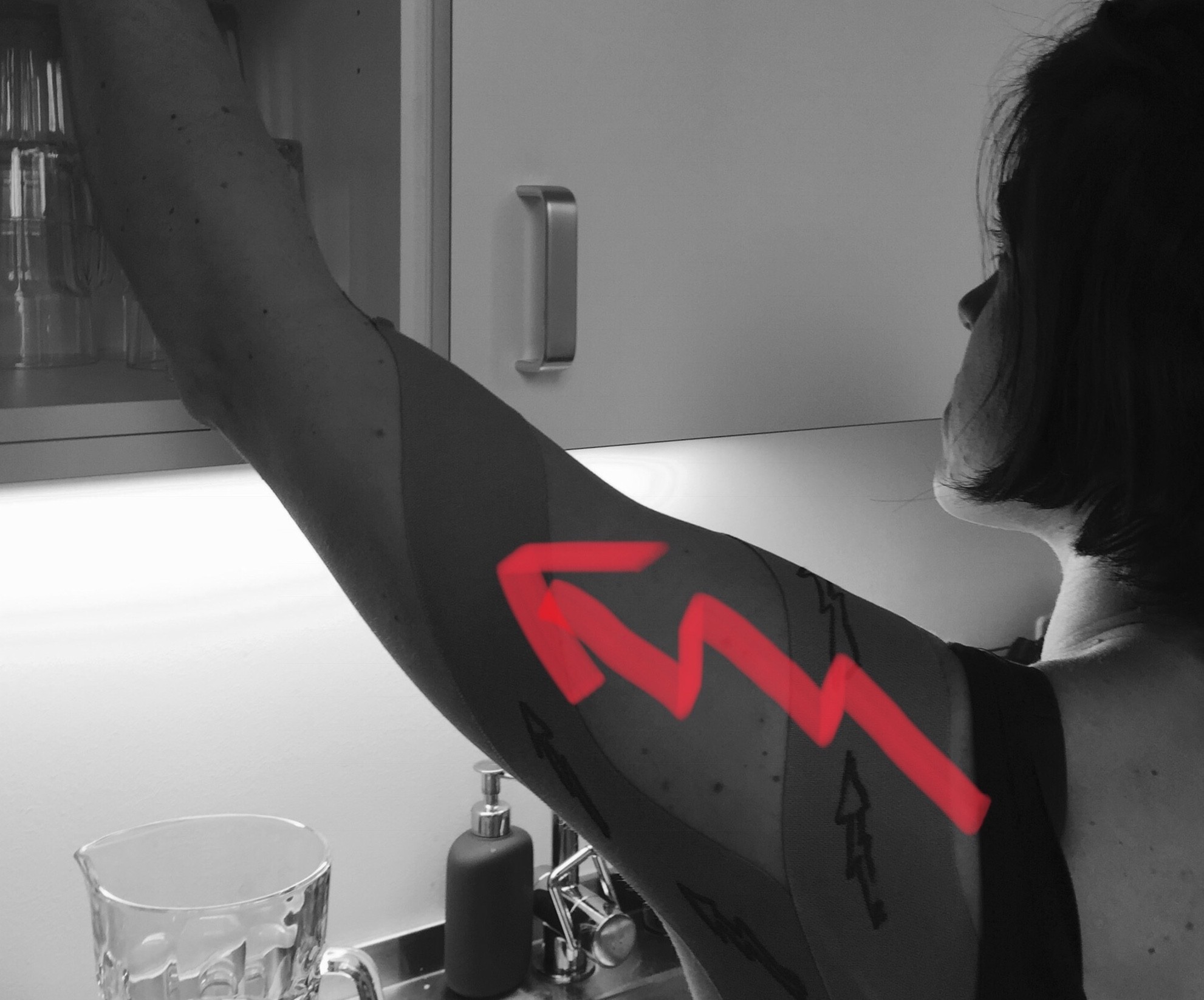
At first, your shoulder hurts for seemingly no reason, and then it gradually becomes stiffer: a frozen shoulder, medically known as adhesive capsulitis, is an inflammation and thickening of the joint capsule. It most commonly affects people between the ages of 40 and 60 and progresses in phases. Sometimes it follows an injury, surgery, or prolonged immobilization. At BodyLab in Zurich Altstetten, we guide you through every phase: providing the right treatment at the right time, rather than stretching at all costs.

The Three Phases of frozen shoulder
Freezing: Pain dominates, often at night too. Your range of motion gradually decreases. If your shoulder remains mobile and mainly hurts when lifting, that points more toward a shoulder impingement.
Frozen: The pain eases, but stiffness takes center stage. Everyday movements like putting on a jacket or fastening a seatbelt become difficult.
Thawing: Mobility gradually returns.
A frozen shoulder is a test of patience over many months, often longer. In the vast majority of cases, the outcome is positive and your shoulder thaws out again. Treatment can relieve pain, preserve mobility, and guide you safely through the phases.
Phase-Appropriate Treatment Instead of Forcing It
In the painful phase: Pain relief and protecting the irritated capsule. Gentle mobilization within a pain-free range, no aggressive stretching. If the pain keeps you awake, a medical injection is an option we can discuss with your doctor.
In the stiff phase: Rebuilding mobility with targeted Physiotherapy, manual therapy for the joint, and exercises for you to do at home.
In the thawing phase: Restoring strength and function so your shoulder is fully ready for daily life again—if you like, right in our practice's training area.
Osteopathy: osteopathy looks at how the shoulder girdle works together as a whole and can be combined into any phase.
Doctor-approved for your peak performance
A frozen shoulder diagnosis should always be medically confirmed, as a stiff, painful shoulder can stem from other causes. Where needed, we'll coordinate directly with your doctor to get you back on track.
Who covers the cost? Let's talk investment in your future.
Physiotherapy is covered by basic insurance with a doctor's referral, or after an accident by accident insurance or your health insurance's accident coverage. You can book osteopathy directly, without a referral; most supplementary insurance policies for alternative and complementary medicine contribute to the costs, and depending on the insurer, this also applies after an accident.
It is best to clarify directly with your insurance provider beforehand how much they will cover.
Whether it is Physiotherapy or osteopathy: you are always welcome as a self-payer, and this does not change anything about your treatment.
You can find the cost of your treatment under Rates and cost coverage.
Typically, the journey takes between one and two years—though some conquer it much faster, while others take a bit longer. Keep in mind that not every shoulder goes completely stiff, and the most challenging, painful phase is usually over much quicker than the overall process.
Which path is yours to conquer?
Three quick questions, and you'll know exactly where to start. Immediate support needed? Call us: 044 545 03 03