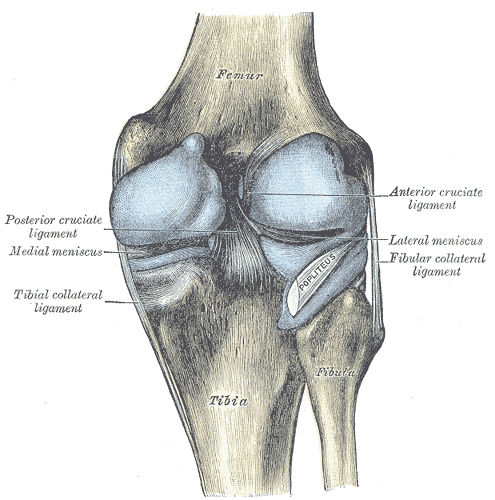
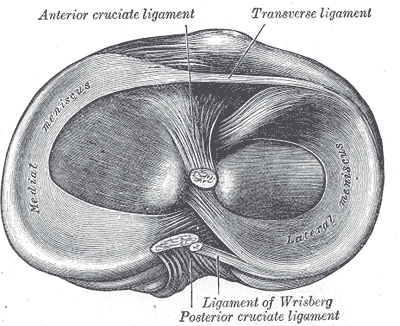
The menisci are the shock absorbers of your knee: two crescent-shaped discs of fibrocartilage that distribute pressure and guide the joint with every step. A meniscus tear happens in two ways: in sport, when the knee twists under load, or gradually, when the tissue loses elasticity over the years until one day an everyday movement is enough, standing up from a squat for example. What many people do not know: a meniscus tear by no means automatically means surgery. At BodyLab in Zurich Altstetten, we support both paths, conservative treatment and rehab after surgery.

How you can recognize a meniscus tear
Possible signs:
stabbing pain in the joint space, more commonly on the inside than the outside
pain during twisting and squatting movements
swelling, often not appearing until hours after loading
a feeling that something is catching or locking
The definitive diagnosis is made by your doctor, usually with an MRI. We also assess how resilient your knee is using clinical and functional tests.
Learn more about the structure and function of the menisci on our blog.
Surgery or conservative care? Conservative more often than many think
Two things determine which path is right for you. First, the type of tear: with degenerative changes from middle age onwards, research has shown for years that a structured exercise program often achieves results just as good in the medium term as an arthroscopic partial removal—without any surgical procedure. A fresh tear sustained during sports is a different story: if it can be sutured, there is a strong case for surgery, especially in young, active people, because suturing preserves the meniscus. Second, the tear zone: the outer edge has a good blood supply and can heal, while the inner zone barely can.
You make this decision together with your doctor. We do not perform surgery; we are your rehab partners on either path. If your knee already shows wear and tear, read more under knee osteoarthritis: there we explain why training comes before arthroscopy.
How we treat your meniscus
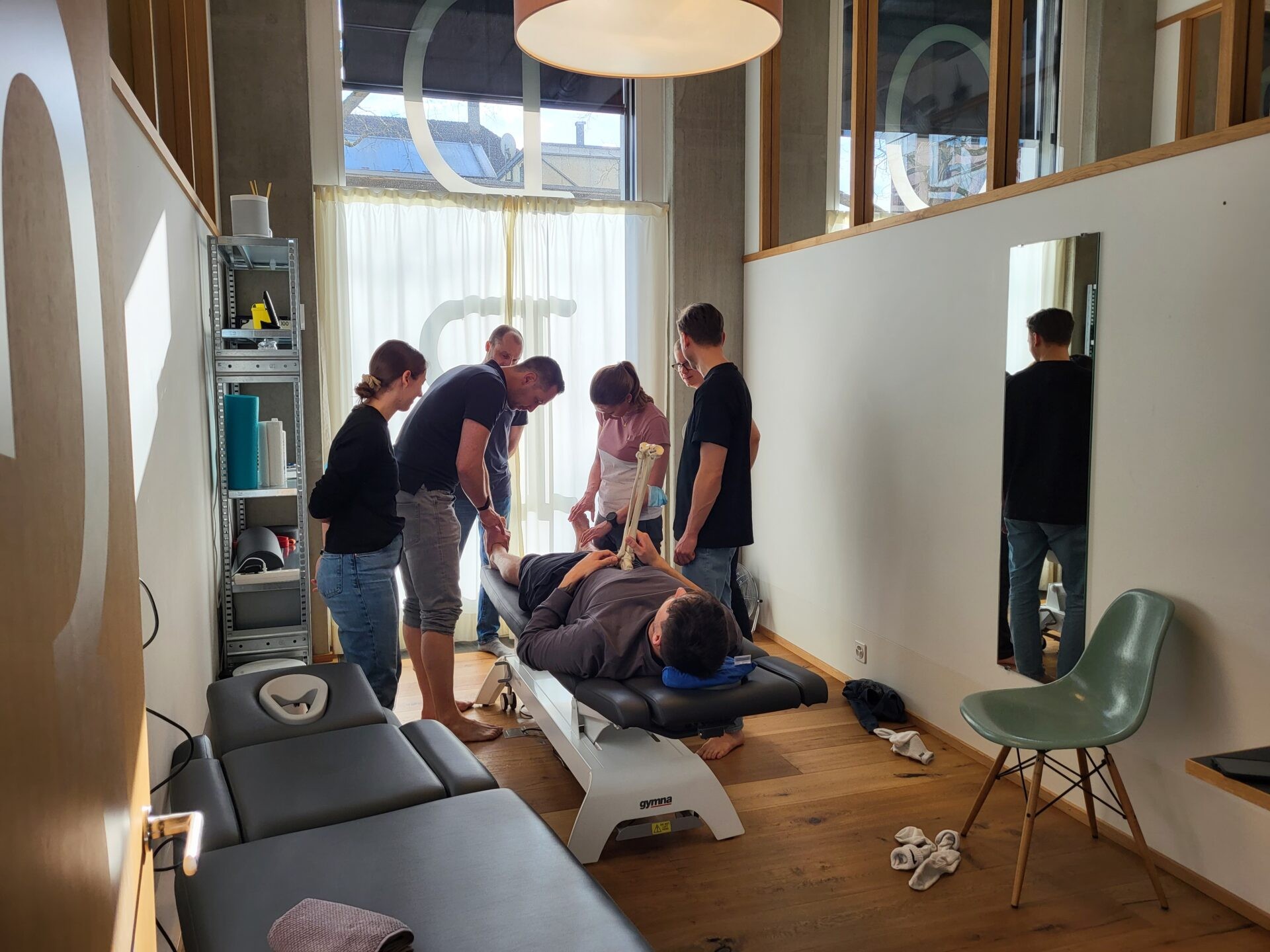
First, the assessment: how resilient is your knee, what triggers your Conditions, and what is your goal? Your plan builds directly on that: manual therapy and Physiotherapy for mobility and soothing irritation, but above all, strengthening your thighs and hips—because strong leg muscles relieve your meniscus with every single step. You train directly in the practice, and if you wish, in medical Training therapy (MTT). Where appropriate, osteopathy complements your treatment, for instance if your hip or pelvis influences the load on your knee.
After meniscus surgery: two procedures, two paces
Partial removal or suturing makes all the difference for your rehab. After a partial removal, you can usually bear weight quickly and often return to everyday life within weeks. After a suture, we protect the stitched tissue for several weeks with limited flexion and adapted weight-bearing; in return, you keep your meniscus. We follow your surgeon's guidelines and progress step by step until everyday life, work, and sports are all back within reach.
Learn more about rehab after knee surgery.
When more than just the meniscus is affected
The meniscus rarely tears alone. In twisting injuries, the anterior cruciate ligament or the medial collateral ligament are often also involved; the combination of all three is called an unhappy triad. Such combined injuries alter the rehab process, particularly regarding permitted weight-bearing and bending.
How we approach recovery after an acl tear.
Overview of all knee Conditions.
Urgent? We've got you covered with same-day appointments.
Acute pain doesn't wait around.
That's why we get you an appointment at short notice, often on the very same day. Book online or give us a call:
When to consult your doctor
Knee pain is rarely dangerous. However, you should get a medical evaluation immediately if you experience any of these signs:
Your knee locks or can no longer be straightened: something may be trapped in the joint.
Tense, rapid swelling shortly after an accident: potential bleeding into the joint.
A fever accompanied by a hot, swollen knee: a possible sign of a joint infection.
You cannot bear weight on your leg after a fall: a fracture must be ruled out.
These signs are rare. If none of them apply to you, nothing is standing in the way of your treatment with us.
Who covers the cost? Let's talk investment in your future.
Physiotherapy is covered by basic insurance with a doctor's referral, or after an accident by accident insurance or your health insurance's accident coverage. You can book osteopathy directly, without a referral; most supplementary insurance policies for alternative and complementary medicine contribute to the costs, and depending on the insurer, this also applies after an accident.
It is best to clarify directly with your insurance provider beforehand how much they will cover.
Whether it is Physiotherapy or osteopathy: you are always welcome as a self-payer, and this does not change anything about your treatment.
You can find the cost of your treatment under Rates and cost coverage.
It all depends on whether your tear is fresh or already diagnosed. If it's a fresh injury, getting a medical evaluation is your first step, because the type and location of the tear dictate what your knee can handle. For a diagnosed, degenerative tear, you can usually keep active with some smart adjustments: cycling or straight-line jogging often feel great, while pivoting, deep squats, and stop-and-go sports can irritate the meniscus. We will pinpoint exactly what load your knee can handle right now during your assessment, and we'll build your strength and progress from there.
Which path is yours to conquer?
Three quick questions, and you'll know exactly where to start. Immediate support needed? Call us: 044 545 03 03