An uneven curb, a landing after a jump, a misstep during training: twisting your ankle is one of the most common injuries of all. Usually, the foot rolls inward, known in medical terms as a supination or inversion trauma. Whether the lateral ligaments are just overstretched or actually torn is not something you can reliably feel yourself. This is exactly where the diagnosis comes in. At BodyLab in Zurich Altstetten, we support you from the acute ankle sprain all the way back to full performance—with quick, short-notice emergency appointments also available.

Sprain or ankle sprain: Which is it?
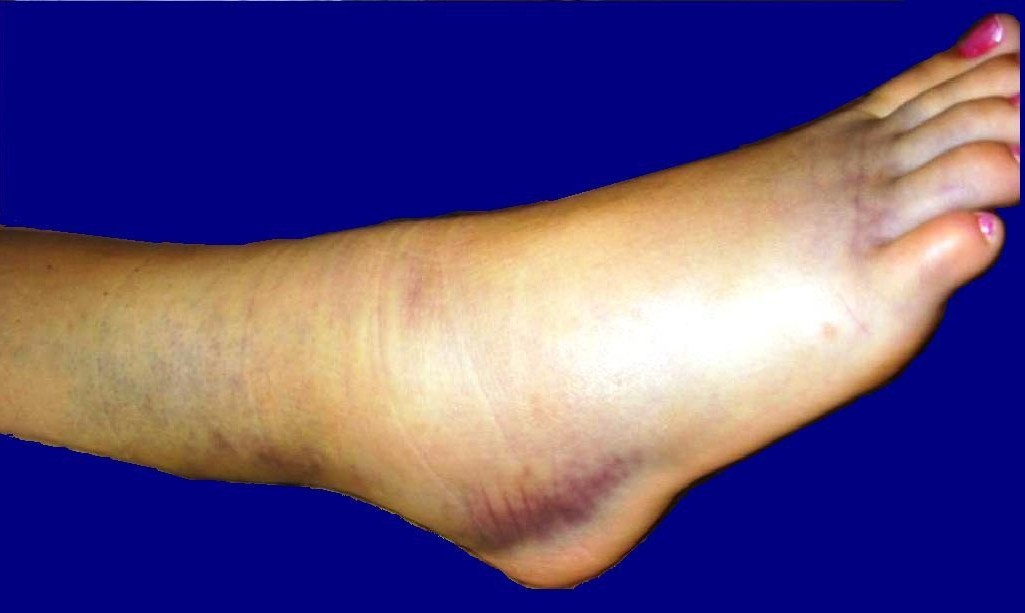
Ligament injuries of the ankle are divided into three grades: from overstretching (Grade I) to a partial tear (Grade II) to a complete tear of one or more ligaments (Grade III). Swelling and bruising actually say little about the severity; even a Grade I injury can swell up dramatically. During your assessment, we test ligament stability, weight-bearing capacity, and surrounding structures. If a bone fracture is suspected—for instance, if putting weight on it is barely possible or the ankle bones are very tender to pressure—an X-ray is needed first; in that case, we refer you directly for medical evaluation.
Why movement usually works better than prolonged immobilization
In the past, ankles were immobilized for weeks after ligament injuries. Today, evidence paints a different picture: most ligament injuries to the ankle heal better with early, controlled movement than with rigid immobilization. As it heals, the ligament needs measured stimuli to scar with proper structure and load tolerance. What matters is the right amount at the right time: first control swelling and pain, then build mobility and strength, then progress to sport-specific loading. Managing this exact progression is our craft. Normal walking barely stresses the injured outer ligament; stress only occurs if your foot twists inward again. The danger is therefore not movement itself, but twisting it again while joint control is impaired. If your doctor gave you a brace, that is not a contradiction: it protects against that specific direction instead of immobilizing the joint, and we adjust how you use it during your recovery based on your capacity.
Preventing chronic instability
If you've twisted your ankle once, you'll often twist it again without targeted rehabilitation—leaving you with an unstable feeling in the joint. The reason often lies not in the ligament itself, but in proprioception: the sensory system your body uses to perceive joint position and react in a split second. After a ligament injury, this system is disrupted and needs to be deliberately retrained. Sensorimotor training—meaning balance and reaction exercises with increasing difficulty—is therefore an integral part of our rehabilitation. Skipping this step risks the next injury. You can read more about this in our blog post on chronic ankle instability.
Treatment at BodyLab
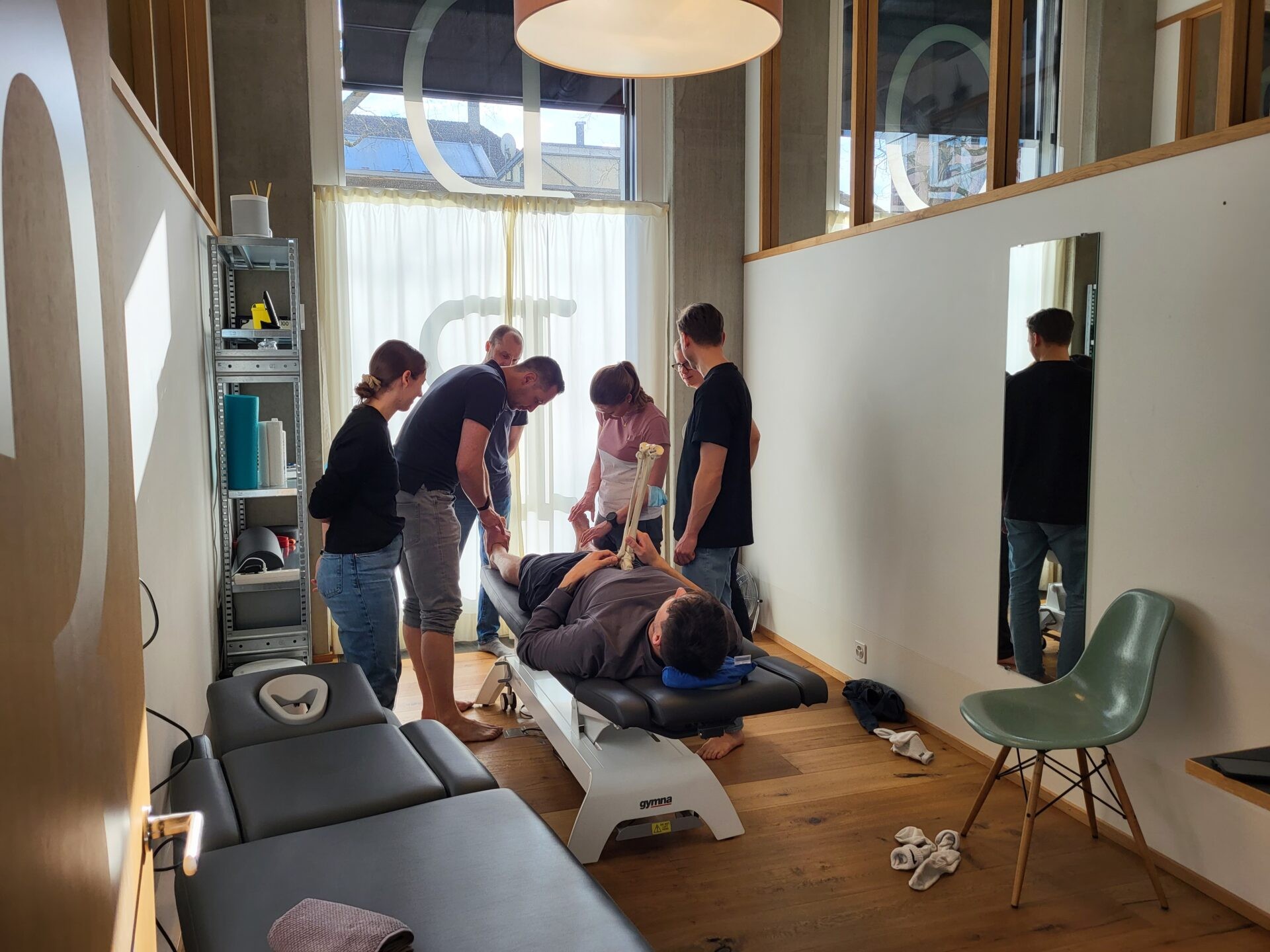
In the acute phase, we focus on swelling management, using manual lymphatic drainage if needed, and assess your weight-bearing tolerance. Then follows structured progression in Physiotherapy: manual therapy for joint mobility, strength and stability training in our dedicated practice gym, and sensorimotor training for joint control. Returning to sports with us is test-based: jumping, landing, and stability tests objectively show when your ankle is ready, rather than leaving it to the calendar. You might know this principle from our ACL rehabilitation. And because many people unconsciously alter their gait after a twisting injury, osteopathy can evaluate the entire kinetic chain when needed: compensatory patterns that place extra strain on your knee, hip, and pelvis can thus be identified and addressed early.
Urgent? We've got you covered with same-day appointments.
Acute pain doesn't wait around.
That's why we get you an appointment at short notice, often on the very same day. Book online or give us a call:
When to consult your doctor
Foot pain is rarely serious. However, seek immediate medical evaluation if you experience any of these signs:
After a fall or twisting your ankle, if you can barely bear weight on your foot: a fracture must be ruled out first
Fever combined with a hot, swollen foot or joint: a possible sign of infection
Sudden numbness or pale, cold toes: indicates a potential nerve or circulatory issue
New swelling accompanied by pain in your calf: a blood clot (thrombosis) must be ruled out
Immediately after twisting your ankle, remember: if you cannot bear weight for four steps or if the bone on the inner or outer ankle is highly sensitive to pressure, your ankle needs to be X-rayed first.
These symptoms are rare. If none of them apply to you, nothing is standing in the way of your successful treatment with us.
Who covers the cost? Let's talk investment in your future.
Physiotherapy is covered by basic insurance with a doctor's referral, or after an accident by accident insurance or your health insurance's accident coverage. You can book osteopathy directly, without a referral; most supplementary insurance policies for alternative and complementary medicine contribute to the costs, and depending on the insurer, this also applies after an accident.
It is best to clarify directly with your insurance provider beforehand how much they will cover.
Whether it is Physiotherapy or osteopathy: you are always welcome as a self-payer, and this does not change anything about your treatment.
You can find the cost of your treatment under Rates and cost coverage.
It all depends on the severity and your ultimate goal: a mild sprain often has you back on your feet in just a few weeks, while a full tear usually takes a few months before you are ready to dominate your sport again. Your recovery always follows the same powerful progression: first swelling and pain subside, then you regain mobility and strength, and finally, you master joint control during rapid changes of direction. The calendar doesn't define your comeback—what your ankle proves in functional tests does. If you aren't back to a normal, confident stride within a few days of rolling your ankle, that is your cue to get a professional assessment.
Which path is yours to conquer?
Three quick questions, and you'll know exactly where to start. Immediate support needed? Call us: 044 545 03 03