The Essentials
The body's remarkable healing process

The human body has the fascinating ability to heal itself! At least up to a certain degree and extent. But when you look at the condition of a house or a machine after 50, 60, or 80 years, this ability truly is astonishing!
And most people put quite a lot of strain and demand on their bodies, even if often not quite correctly… because it is not movement that harms your body, but the wrong kind or lack thereof!
“It’s not movement that destroys a Machine, it’s friction”
As osteopaths and physiotherapists, we need to know the wound healing process and its phases inside out in order to design our therapy optimally and effectively. That means, depending on the wound healing phase you find yourself in as a patient, we as manual therapists have to choose properly dosed techniques and applications and plan your therapy accordingly.
The goal of wound healing is the complete functional restoration of the injured structures. And the more optimally physiological stimuli act on your injured tissue, the more optimal the healing process will be – with less scar tissue.
Wound healing in the human body (whether for an injured intervertebral disc, a torn or operated cruciate ligament, a sprained joint capsule or ligaments, or a broken bone) always occurs in different phases. In Physiotherapy and osteopathy, these wound healing phases are classified and differentiated as follows:
Inflammatory phase
Proliferation phase
Consolidation phase
Remodeling phase
Further, more detailed sub-classifications are possible and sometimes used.
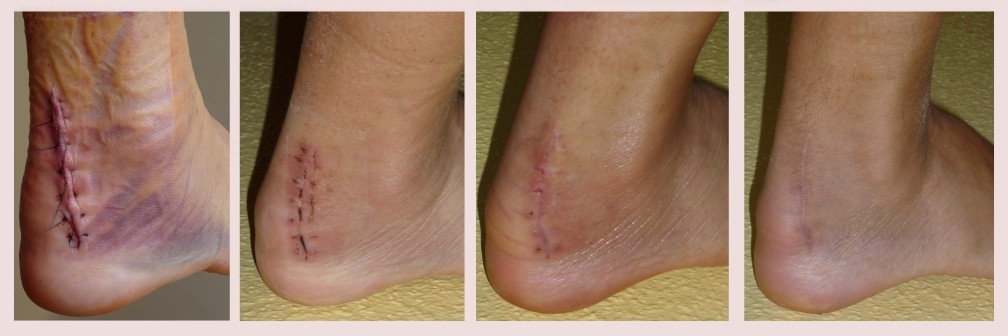
Healing process of a heel surgery after 2 days, 15 days, 20 days, 6 months, Kaspar1892, Surgical suture, healing process, CC BY 3.0
These phases can overlap and differ depending on the tissue. What determines the duration of each phase is the blood supply to the injured tissue, as well as the extent of the damage. This also affects the turnover time of the tissue: all tissues in the human body are sooner or later renewed and replaced. If the tissue has a good blood supply, the turnover time and the healing time are relatively fast. An example of this is the skin: after a cut, nothing can be seen within a few weeks (the turnover time is around 3 weeks, meaning our skin is renewed every three weeks).
An intervertebral disc, on the other hand, which can be responsible for back pain or back problems, does not have such a good blood supply and has a turnover time of approx. 400 – 500 days (so it takes over a year for the tissue of an intervertebral disc to renew itself).
Depending on the actuality (which in medicine describes the current state of the tissue, and so a chronic condition can also be in a state of high actuality, e.g. activated osteoarthritis. Not to be confused with acute), which a therapist must identify, different therapy options and techniques with different goals are applied.
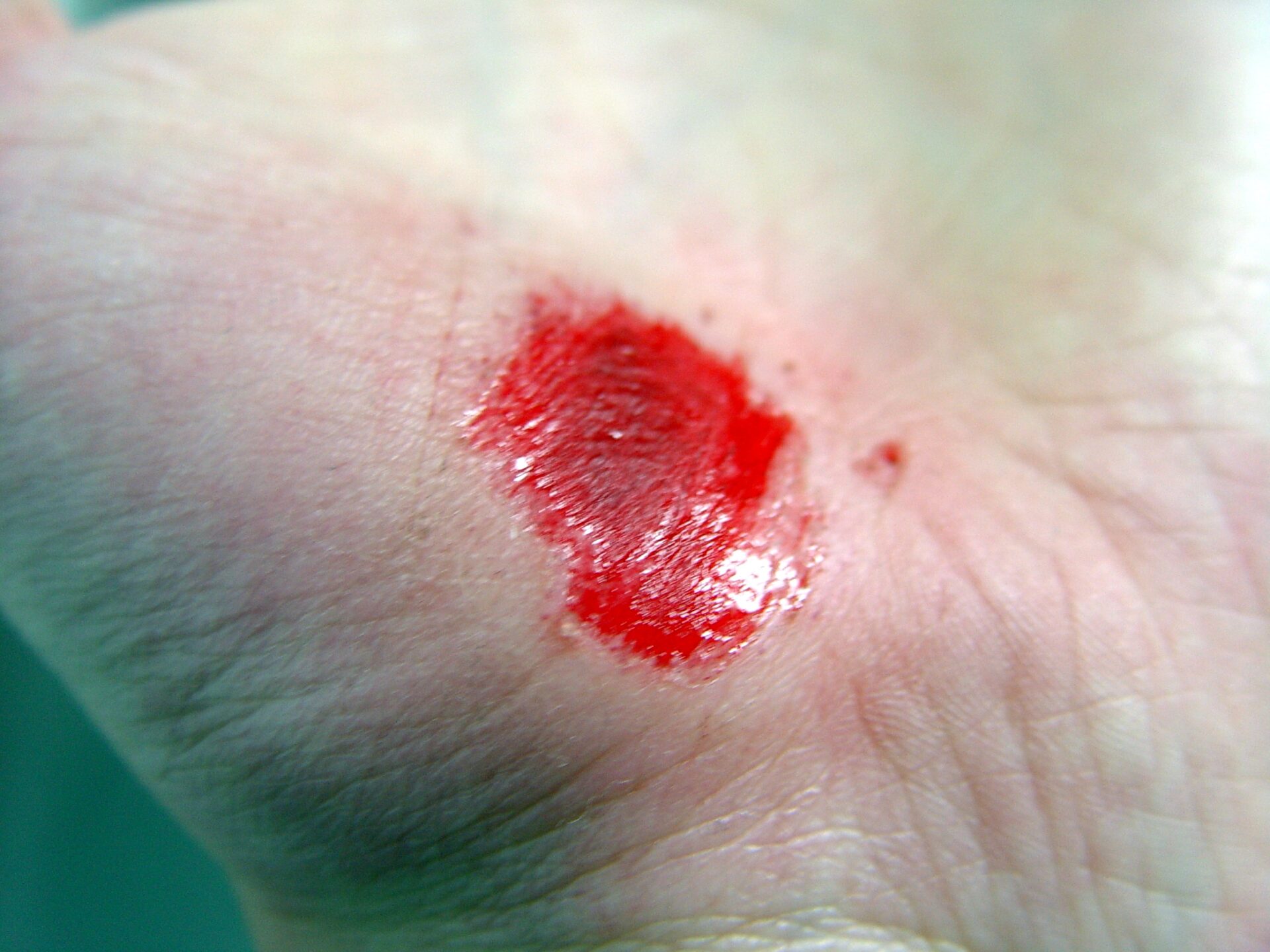
Abrasion of the hand – 32 minutes after injury, Jpbarrass, marked as public domain, Details on Wikimedia Commons
Inflammatory phase of wound healing
The inflammatory phase lasts, depending on the tissue, between 3 and 7 days after the injury. It is characterized by pain and swelling partly caused by the inflammation.
The inflammation creates optimal conditions to activate the body's own cells (e.g. macrophages, leukocytes, lymphocytes), substances, and enzymes (similar to a fever).
Through the oxygen-rich blood and the proteins within it leaking into the injured tissue, the body cells and connective tissue cells are controlled and a mutually influencing cascade is activated. Due to the released proteins, more fluid is stored, which causes the swelling. As a result, the tissue becomes looser and body cells can migrate better into the injured area.
The tissue begins repairing the vascular system, and your body provides initial emergency care and repair using auxiliary tissue (collagen type III) to close the wound as quickly as possible. Although collagen synthesis has already begun, the new formation of fibroblasts and myofibroblasts dominates in this phase.
Pain-relieving and decongestive measures are the main focus during this phase. Adjusted rest and relief of the injured tissue are indicated. If necessary, compression bandages can be used. The sympathetic autonomic nervous system should be calmed. Pain-free movements within the matrix range of the tissue (passive or active mobilization) are nevertheless indicated and important in most cases to stimulate the connective tissue. However, mechanical loads should be approached very cautiously, as the tissue is still very unstable due to the lack of ground substance production.
Electrotherapy or ultrasound can be a good addition to the therapy during this phase
Your body should be able to complete the inflammatory phase as quickly as possible. Therapy should support it in doing so.
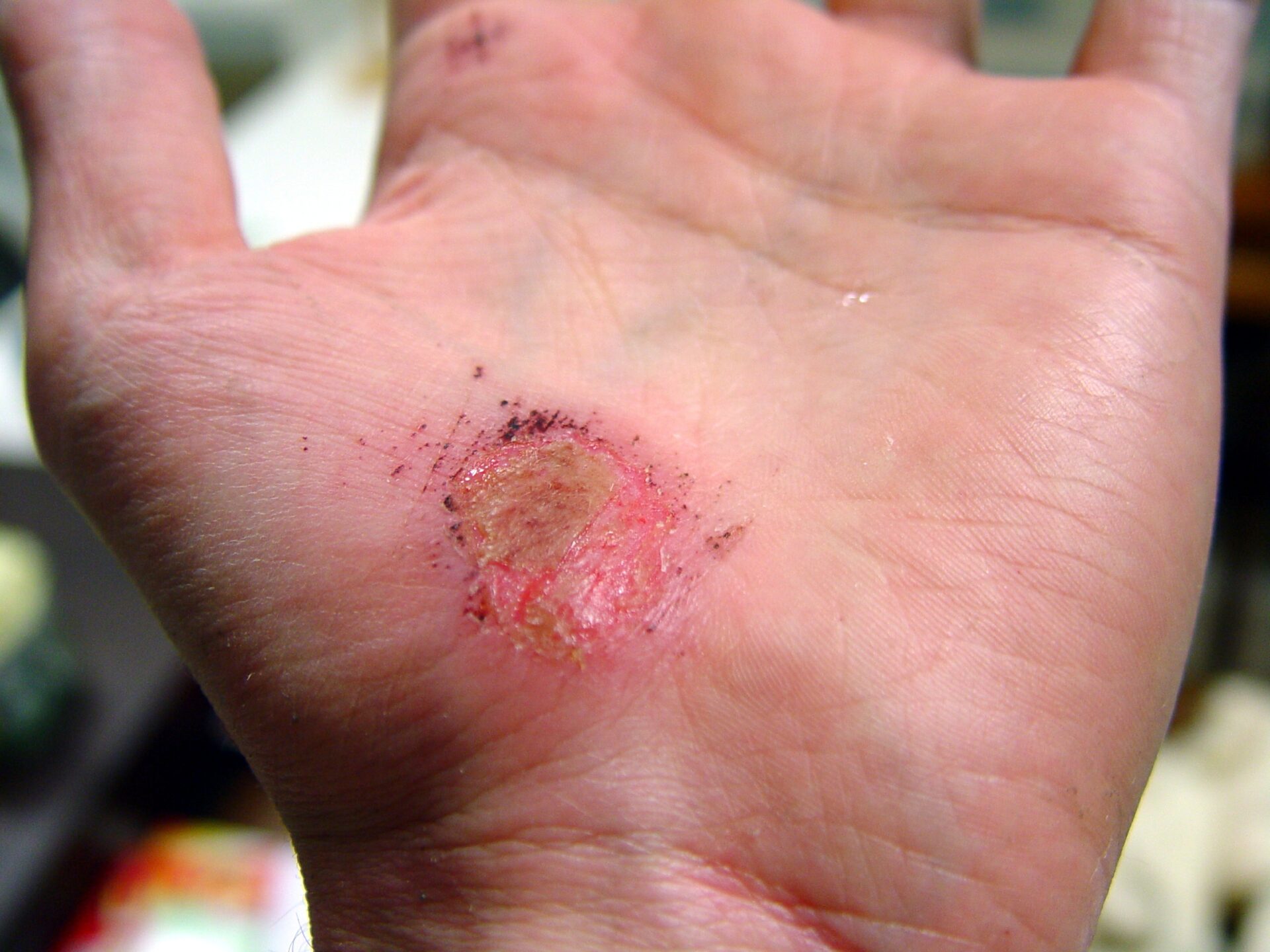
Abrasion of the hand – 2 days 22 hours 12 minutes after injury, Jpbarrass, marked as public domain, Details on Wikimedia Commons
Proliferation phase of wound healing
This phase usually lasts between 3 and 10 weeks after the injury. In the proliferation phase, your pain decreases significantly and your range of motion increases. Regeneration of the connective tissue takes place (initial remodeling of the previously formed auxiliary tissue). Collagen synthesis is very pronounced in this phase. However, the fibers are initially very thin and lie close together. As before, ground substance production in this phase is rather low, which means the tissue is still not very elastic and only limitedly stable.
You should load it physiologically, functionally, and pain-free so that the fibers of the connective tissue, which are synthesized in large numbers, can align optimally and no scar tissue with faulty cross-links forms. This is crucial in this phase! Neuromuscular facilitation for natural movement and loading is one of the therapy's goals. Circulation-enhancing measures for metabolic optimization as well as promoting the synthetic activity of connective tissue cells take center stage. Training volume can be increased (though not, or only cautiously, training intensity! We do not want to cause new injuries in your tissue, and the tissue is not yet fully stable, as explained above). We start with functional, coordinative exercises in a closed kinetic chain to improve proprioception (exercises in three-dimensional patterns)
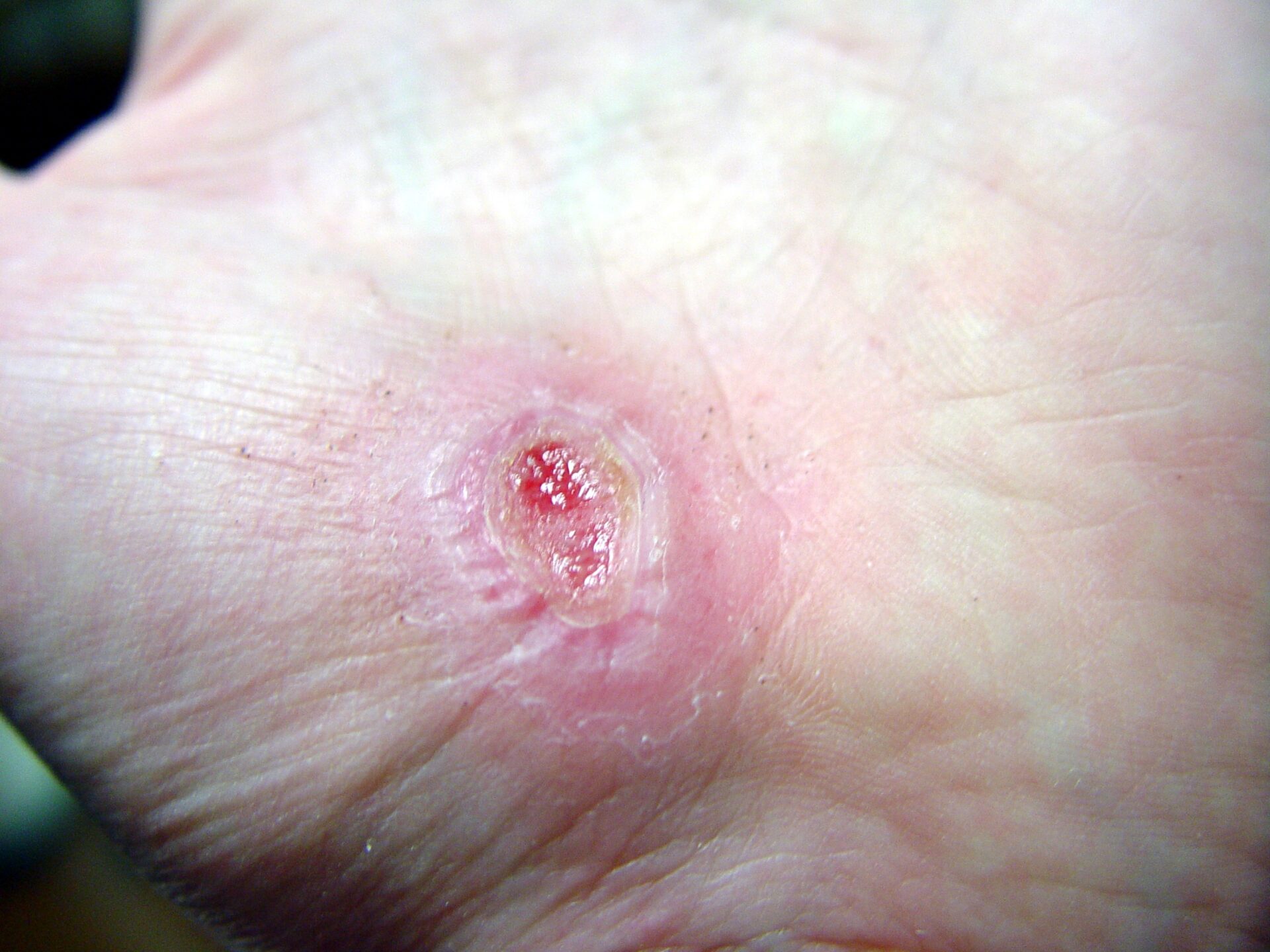
Abrasion of the hand – 17 days 11 hours 30 minutes after injury, Jpbarrass, marked as public domain, Details on Wikimedia Commons
Consolidation phase of wound healing
The consolidation phase lasts up to 12 weeks after an injury. The collagen network is remodeled once again; the fibers become thicker and more stable (collagen type I). Through increased ground substance production by fibroblasts in this phase, the tissue's load capacity increases significantly, and the distance between the fibers widens. These are prerequisites for forming a stable network of collagen fibers. This also improves the tissue's elasticity.
In this phase, active therapies are increasingly at the forefront, as well as your goals and demands as a patient: what do you need and what do you want (the difference between an elite athlete or an office worker). The load can be increased significantly (treatment in the collagenous loading zone).
Repeated end-range mobilizations to achieve full mobility should be performed to eliminate movement deficits. Tailored and progressively heavier functional three-dimensional exercises promote further improvement in proprioception and dynamic stability. You can start speed training, such as jumping and running coordination drills. We begin with maximum strength training in a closed chain, as well as strength training with free weights.
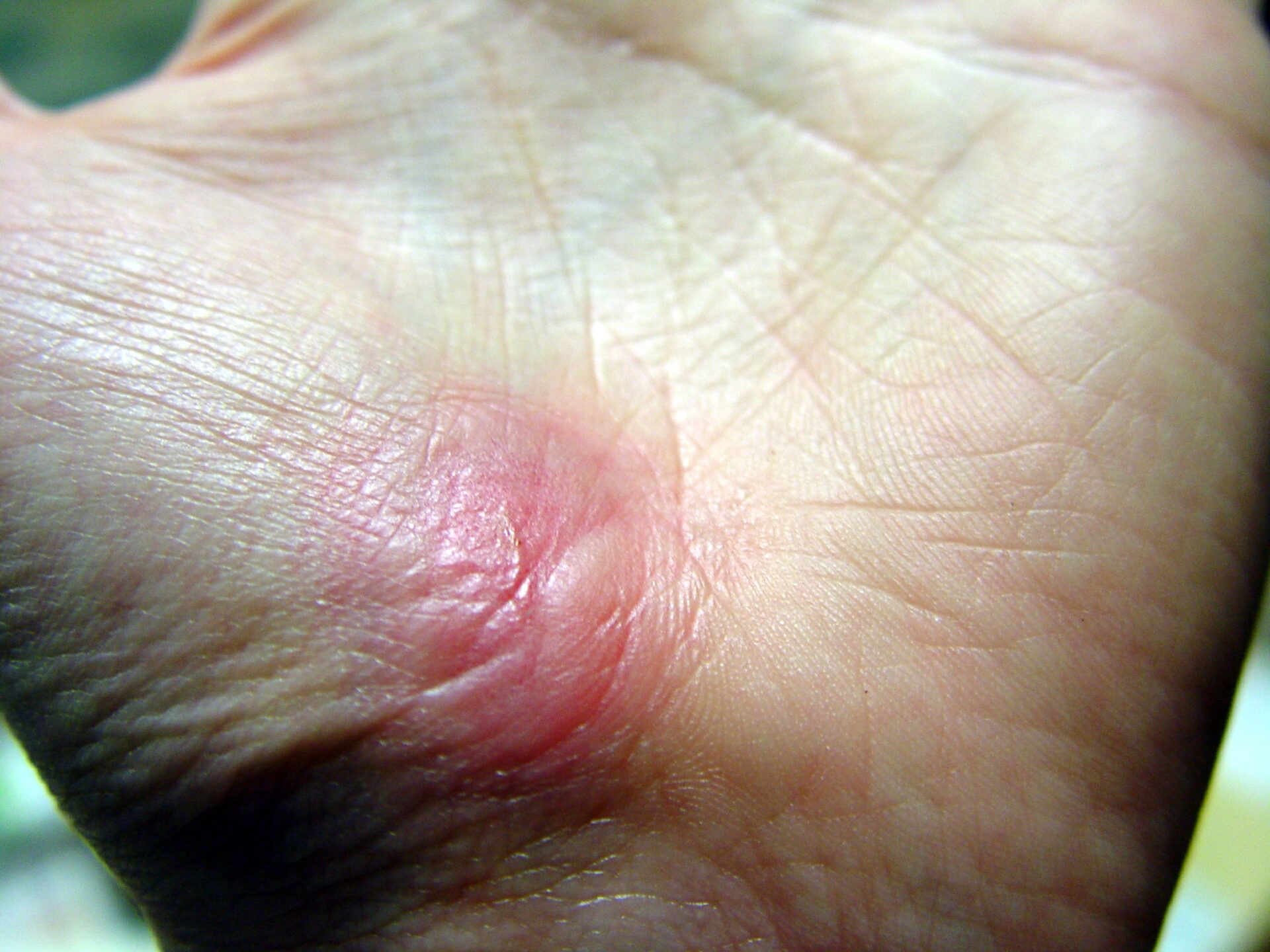
Abrasion of the hand – 30 days 4 hours 43 minutes after injury, Jpbarrass, marked as public domain, Details on Wikimedia Commons
Remodeling phase of wound healing
The remodeling phase follows the consolidation phase and must also be viewed in connection with a tissue's turnover time. The collagen type III originally laid down has largely been remodeled into stronger type I collagen fibers. The original injury site has developed from predominantly cellular tissue into normal collagenous connective tissue.
In this phase, ADL activities (activities of daily living) and your needs and demands as a patient take center stage: Function shapes structure! Exercises, training, and therapy should be tailored to your daily life, job, or sport.
Exercises target reactive abilities, speed, and optimization of the stretch-shortening cycle. Eccentric loading, supramaximal and, if possible, maximal strength training in closed and open chains, as well as sport-specific exercises, are used. If appropriate, mock competitions or duel situations are added to the training.
The load capacity of a tissue depends on which cells are active in the individual phases and which tissue components they synthesize.
Perhaps you now also understand why you usually wear a cast for 6 weeks, or why you often have to use crutches for 4–6 weeks after leg surgery.
All phases of wound healing actually begin at the same time immediately, as demonstrated with enzyme histochemical methods, and must be viewed as an interconnected process. The phases overlap, and as therapists, we need to be able to recognize when a phase has largely been completed by your body in order to take the next step in therapy and apply the optimal physiological stimuli to your tissue.
There is no faster healing than optimal healing! We at BodyLab have the expertise to optimally support and guide you as a patient with injuries to the musculoskeletal system. To relieve your pain and to recognize or prevent delays and complications (such as infections or later deficits) early on. For an optimal, fastest possible, and best result.
Whenever you need us, we are here for you!
Your BodyLab team, your specialists on the path to healing
Osteopathy and Physiotherapy | Rehabilitation and Training
Zurich Altstetten
Find out more on our page rehab after surgery.
Cover image credit
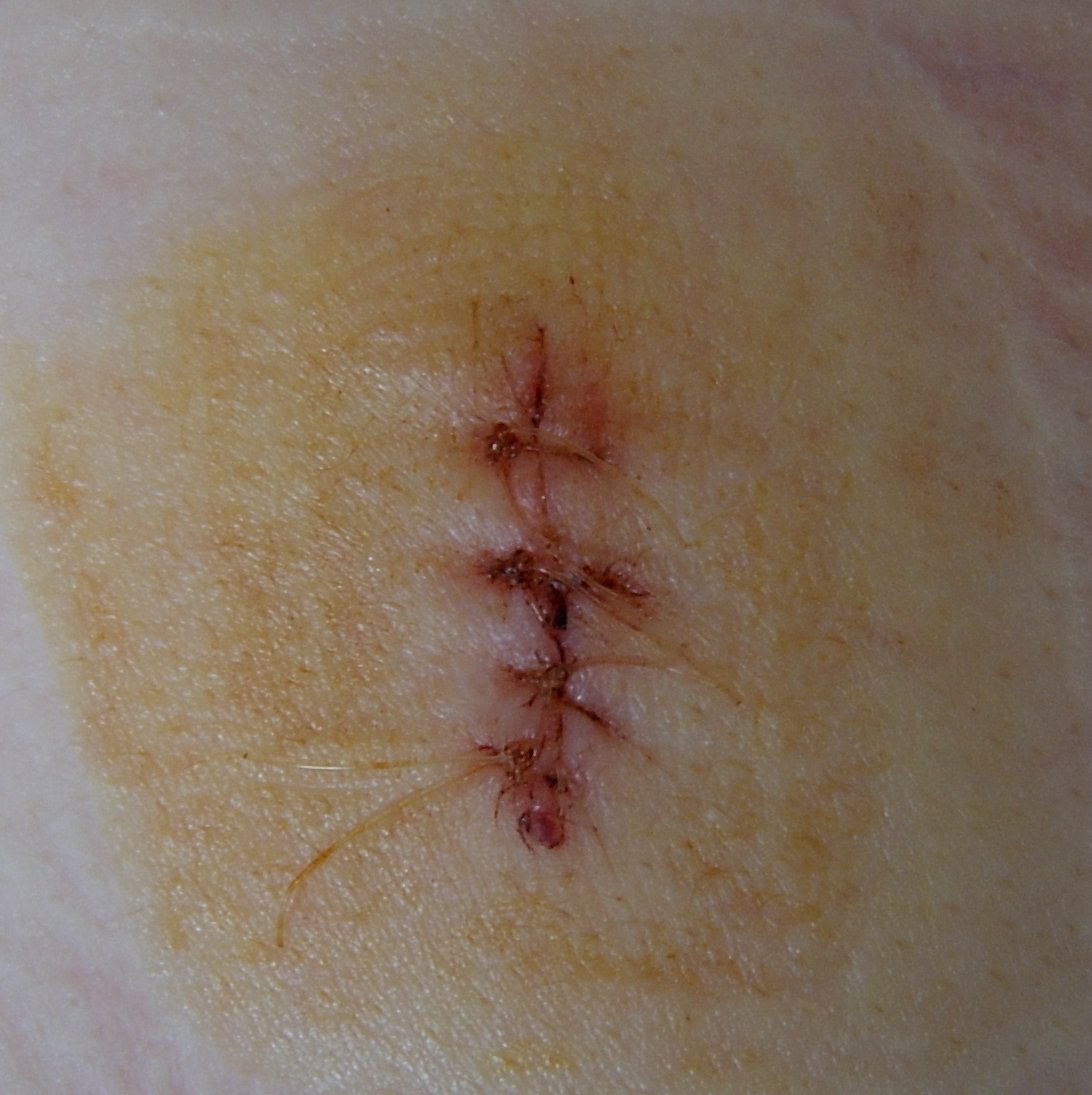
Carsten Niehaus (Lumbar), Wound sewed, CC BY-SA 1.0