The Essentials
Clinical Trials - Sensitivity, Specificity, Validity & More.
When it comes to problems and Conditions affecting the human body, the musculoskeletal system, and your movement apparatus, we at BodyLab, osteopathy and Physiotherapy, Rehabilitation and Training Zurich are your professionals.
Whether with or without a doctor's referral, patients come to us looking for our help or support.
For us, the first step is always to find out where and in which structure the problem actually lies. Even medical diagnoses often only describe roughly (or not at all) where the problem is located. For example, lumbar spine syndrome or lumbago merely tells you that you have problems, Conditions, or pain in your lower back. Similarly, epicondylitis (tennis elbow) says nothing about its underlying cause. The issue could be muscular (which then raises the question: in which muscle and where exactly?), or it could lie in the tendon or at the bone-tendon junction. We could provide countless examples here…
An examination always begins with a detailed medical history: this is where your subjective problems and Conditions are recorded. Where are the problem and the pain, and when do they occur / what triggers them and what brings relief or feels good? Is it unilateral or bilateral? Are there radiating sensations, paresthesias? What is the timeframe and progression since the issue started? Was there a triggering event (trauma, overuse)? What do your normal activities look like (activities of daily living, work, hobbies), and what can you still manage and what can you no longer do? Previous illnesses, injuries, surgeries, dietary habits, etc., are also of great interest.
In addition, there is the social and family history (family background, physical stress vs. resilience of the system), whether medications are needed or being taken, as well as identifying yellow and red flags—all crucial points to uncover, as you will see later on.
Already during this process, the osteopath or physiotherapist forms various hypotheses based on their knowledge and clinical experience.
Using clinical reasoning, functional and movement examinations, and various diagnostic tests, the hypotheses and Conditions gathered during your medical history are objectified.
As the saying goes, "a little knowledge is a dangerous thing—or measure wrong, get it wrong." That is why it is absolutely vital to use the right, adequate tests; otherwise, they are of no use at all. Let us explain this a bit further.
To help you understand, here is a figurative comparison: If you went fishing in a lake (like Lake Zurich) with a wide-meshed net, you would only catch very large fish, or perhaps none at all. You might then think that this lake only holds large fish. Which, of course, is not true. But that net simply was not sensitive enough, nor valid for that lake, to catch small fish.
That is why, after taking the medical history, you must use sound clinical reasoning to ask yourself:
What do I want to measure?
Am I measuring/testing correctly?
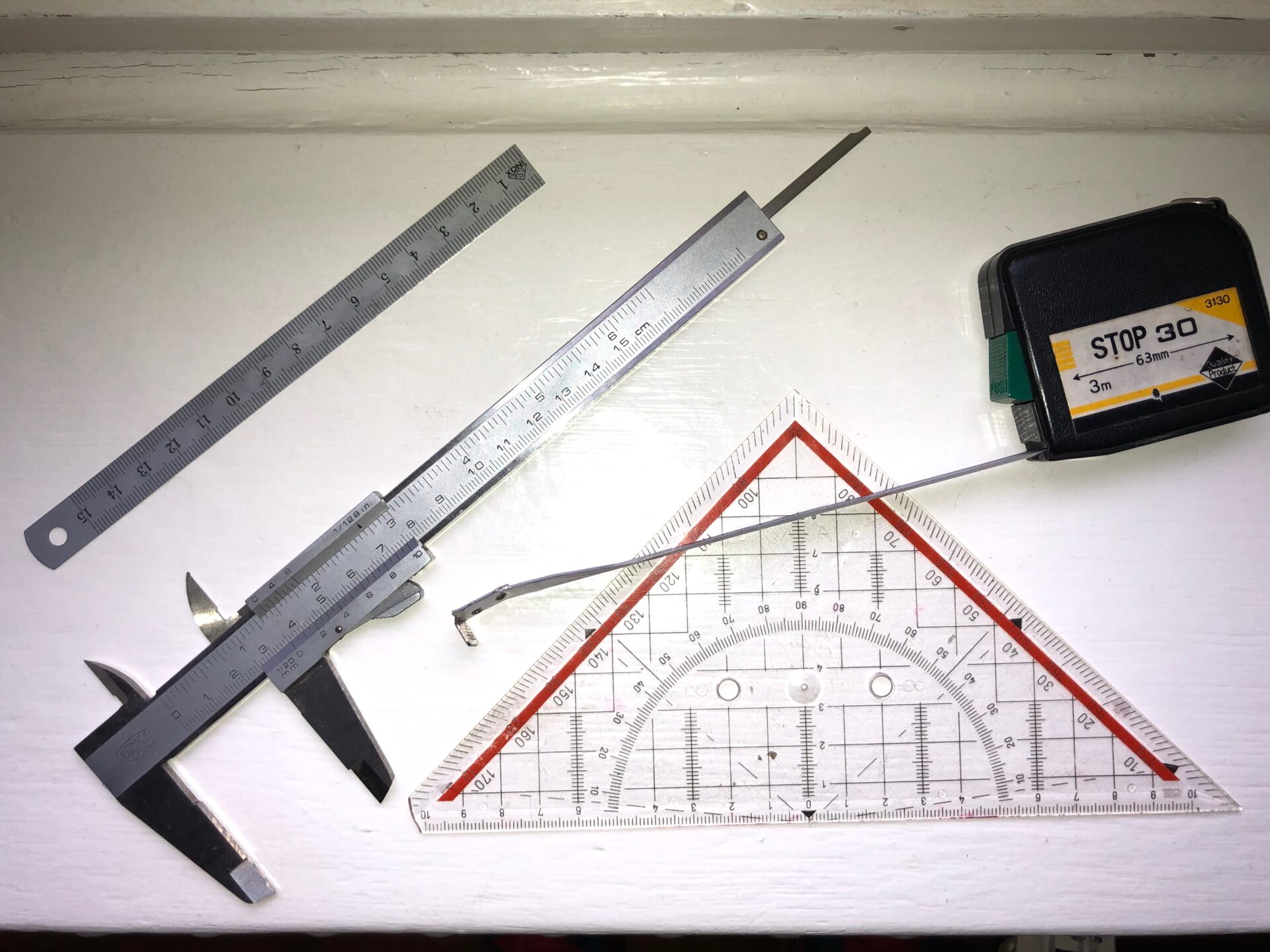
Do I have the ideal measuring tool?
Sensitivity / Specificity / Validity
-> Note: Always work with the hypothesis derived from the medical history!
Measuring instruments—and orthopedic or manual clinical tests are to be viewed as such—can be categorized according to various criteria:
Sensitivity
Specificity
Validity
Reliability
This is why a thorough and comprehensive medical history, followed by a working hypothesis (therapeutic diagnosis), is so immensely important for selecting the right clinical test!
Sensitivity
The sensitivity (also known as true-positive rate) of a diagnostic test provides information on how likely a positive test result is in a person who actually has the problem. More specifically, in what proportion of affected patients the respective condition is genuinely detected by the test, resulting in a positive test result.
The higher a test's sensitivity, the more reliably it detects the condition.
Specificity
The specificity of a test indicates how likely a negative test result is displayed in healthy individuals (without the condition or injury).
In other words, it indicates the likelihood that healthy individuals who do not suffer from the condition in question are indeed recognized as healthy by the test.
Validity
Validity tells you whether a test actually measures what you intend to measure. A test is valid if it genuinely measures what it is designed to measure.
Reliability
Reliability represents the accuracy and consistency of a test. This means whether a test would yield the same result when repeated under identical conditions (reproducibility).
A test is reliable when repeated use produces the greatest possible consistency, meaning the result does not depend on chance.
Objectivity
The objectivity of a test refers to the independence of the results from external conditions and distorting third-party factors.
Responsiveness
This is the measurement sensitivity. It determines the ability of a measurement to show (measure) meaningful clinical changes over time. Highly relevant for monitoring the progress of your therapy!
Note: Higher sensitivity (approaching 100%) can only be achieved by lowering cut-off values; however, this comes at the expense of specificity!!
As you can clearly see, isolated, disconnected clinical tests make little sense and yield no useful results, telling us very little about a problem. A major pitfall for inexperienced therapists! Furthermore, performing too many tests provokes and irritates injured structures, which can likewise prevent a clear result from being found.
Therefore, based on the hypothesis (or hypotheses) formed from the medical history and clinical reasoning, the right diagnostic tests should be selected—and executed correctly. This also means a therapist must understand what a clinical test can and cannot do, and why it is being used! Is it positive when pain occurs or is triggered? Or is an abnormal range of motion/play a positive sign? Or is a weakened or absent reflex a positive sign?
The clinical tests should also be performed in the right order so they can be interpreted optimally.
Clinical Tests: Optimal Order and Procedure
Screening test (high sensitivity)
-> to rule out pathology when they are negative
Validating test (high specificity)
-> A negative result should mean that the cause is genuinely not present
Exclusionary test (high specificity)
Provocation or reduction test
Mechanical test
To start, a test with high sensitivity and specificity for the structure in question should be performed to find out if there is a problem. This should be followed by a test with high validity to ensure that very structure is tested! Exclusionary or provocation tests complement the examination, and mechanical tests can be used to verify the findings.
Scientific Studies on Medical Clinical Tests
From our perspective, as a therapist, you should constantly reflect on your thinking and actions and question them critically.
In medical literature, studies and publications repeatedly evaluate clinical tests for their accuracy and validity. A benchmark reference on manual examination tests is the book Orthopedic Physical Examination Tests: An Evidence-Based Approach by Chad E. Cook and Eric J. Hegedus.
You should verify, monitor, and document your findings through objectification. With a bit of practice and experience, this doesn't take much time at all!
Here is our (non-exhaustive) selection of practical tests for a wide variety of problems—ideal for daily therapeutic practice:
Goniometer: For range of motion
Muscle function testing: Manual muscle strength assessment
Visual Analog Scale (VAS): e.g., for pain
Coping Strategies Questionnaire: Assessing pain coping mechanisms
Short-Form McGill Pain Questionnaire:Evaluating pain
Disabilities of the Arm, Shoulder and Hand (DASH or QuickDASH): Conditions and functional abilities of your arm
Shoulder Pain and Disability Index: Assessing shoulder Conditions
Berg Balance Scale: An insightful balance test
POMA Tinetti Test: Detecting fall risk
Dynamic Gait Index: Assessing balance while walking
Timed Walking Tests: Objectively measuring locomotion
Timed Up and Go Test: Standing up, walking, and turning
Sharp-Purser Test: Testing upper cervical spine stability
Borg Scale: How demanding does this feel to you? Measuring subjective exertion
6-Minute Walk Test: Has endurance improved?
3-Minute Step Test: Your quick fitness check
Conconi Test: Determining aerobic performance
Goal Attainment Scale (GAS): Objectively measuring subjective goals
Chedoke-McMaster Stroke Assessment: Post-stroke recovery assessment
Trunk Impairment Scale: Trunk stability after stroke
You can find further practical clinical tests on the website of the IGPTR Interest Group Physiotherapy Rehabilitation.
Objective measurements allow therapy outcomes and treatment progress to be monitored and documented much more clearly. Moreover, changes that might otherwise go unnoticed by you as a patient or by your therapist can be identified through proper testing.
To recap: Carefully consider which clinical tests or measuring instruments you want to use for which specific problem, as these tests are not inherently valid for every Condition!
Test results are not set in stone; they are reviewed continuously, even during your treatment session. Therapeutic interventions are consistently reassessed through re-testing and observing the treatment response, and adjusted whenever necessary!
As you can see, the human body and manual medicine are complex. But that's what makes it so fascinating. Choosing a committed, skilled, and competent therapist is always worth it.
Because as the saying goes: measure wrong, get it wrong.
Whenever you need us, we are here for you!
Your BodyLab team, your specialists after physical injuries
osteopathy and Physiotherapy | Rehabilitation and Training
Zurich Altstetten
Find out more on our Physiotherapy page.
References
Orthopedic Physical Examination Tests: An Evidence-Based Approach
Chad E. Cook, Eric J. Hegedus
2008 by Pearson Education Inc., Upper Saddle River, New Jersey 07458
IGPTR Interest Group Physiotherapy Rehabilitation